
The Zeiss Ikon Ikonta cameras have been produced since 1929 and were offered in four model lines (A, B, C, and D) with different negative formats (4,5 x 6, 6 x 6, 6 x 9, and 6,5 x 11 cm). The Super Ikonta production line started not until 1934 with the Super Ikonta A (530) for 4,5 x 6 cm negatives. Basically, Ikonta variants which included a coupled rangefinder were named Super Ikonta. In contrast to the previous Super Ikontas, the Super Ikonta III and IV lacked the arm on the lens standard housing with the rotating wedge for the external rangefinder and used the principle of a mirror and a moving lens with the whole rangefinder incorporated into the topcover. The newer models were smaller and lighter than the earlier ones. A sophisticated film winding mechanism (including auto frame counter and double-exposure prevention) allowed the film to be advanced without having to watch the frame numbers on the backing paper in the red window of the camera back, which enabled more rapid shooting. Like Agfa folders, Zeiss Ikontas and Super Ikontas were fitted with a wide range of lenses and shutters and the cameras were priced accordingly (the buyer could determine which combination was ordered). The post-war shutters usually have flash synchronisation. The lenses produced after the WW II were coated, which reduces light reflections between the lens elements, avoids lens flare and increases the contrast.
“The camera bodies and bellows were produced in Stuttgart, shutters were ordered from Friedrich Deckel in Munich and shipped to Carl Zeiss Jena, who mounted the lens into the shutters. Then the lens and shutter assembly was shipped to Stuttgart for mounting to the body. Rangefinder components were manufactured in the Ernemann plant in Dresden before the war, and shipped to Stuttgart for acceptance testing and assembly into the cameras. After the war the rangefinder components were outsourced to Rodenstock”. Source: camera-wiki.org/wiki/Super_Ikonta_532/16
Super Ikonta I
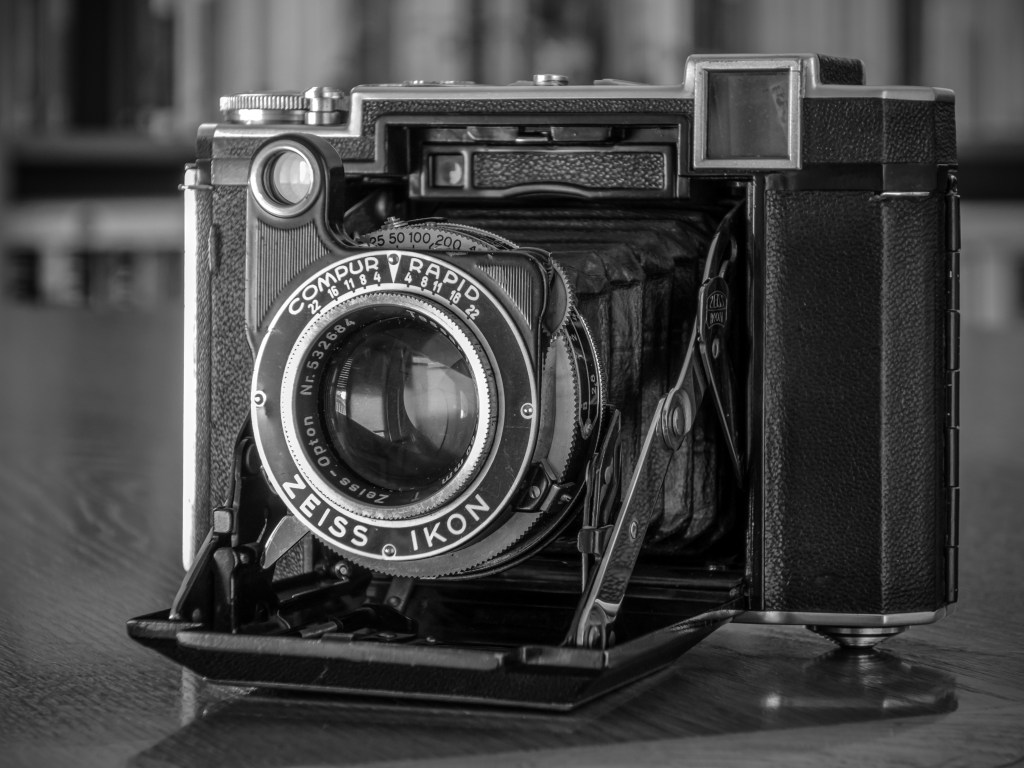
Zeiss Ikon Super Ikonta I/B (532/16) with Zeiss-Opton Tessar f/2.8 80 mm and Compur Rapid shutter
The Zeiss Ikon Super Ikonta I (532/16) was produced from 1937 to 1955 by the German Zeiss Ikon company. It was also sold under the name Super Ikonta B. The original Super Ikonta B featured an uncoated f/2.8 Tessar produced by Carl Zeiss Jena. This camera is fitted with a coated f/2.8 80 mm Tessar produced in the post-war Zeiss plant in Oberkochen (Zeiss-Opton) in West-Germany. The lens of the pre-war cameras was set in a Compur-Rapid shutter and the post-war cameras had either a Copur-Rapid or a Synchro-Compur shutter. Like all Super Ikontas, the camera is equipped with a coupled rangefinder. In contrast to its predecessor (530/16), the 532/16 model unified the rangefinder and the viewfinder into one larger window.
The Super Ikonta II (BX) was produced from 1939 to 1955. This model was based on the construction of the Super Ikonta I and was equipped with an uncoupled selenium light meter.
The automated film transport stop and frame counting mechanism taken over from the first Super Ikonta B (530/16) makes the camera faster in use. The red window in the camera back is only needed for lining up the first shot. Like its predecessor, the 532/16 model takes 11 (instead of the standard 12) 6×6 cm images on 120 type rollfilm. The unusual number of frames is caused by a design change during the time of production of the 530/16 model to encounter frame overlapping problems. The production process before and after the war was somewhat complex:
Super Ikonta III
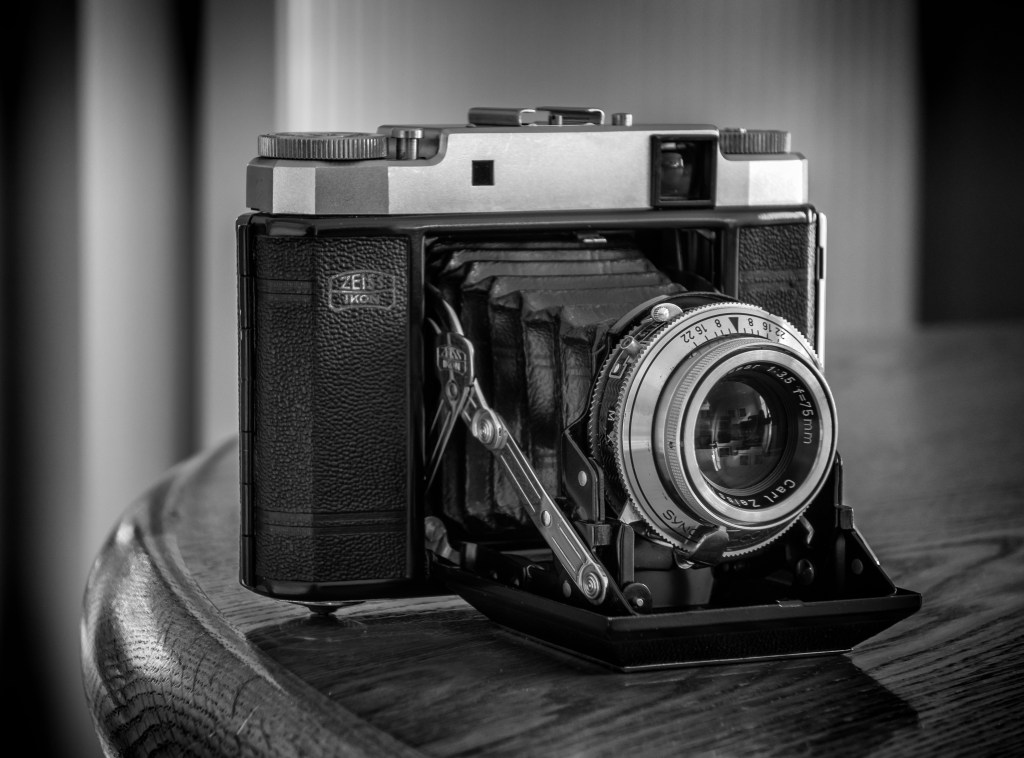
Zeiss Ikon Super Ikonta III (531/16) with Carl Zeiss Tessar f/3.5 75 mm and Synchro-Compur shutter
The Super Ikonta III (also labeled with its catalog number 531/16 and sometimes named “Pocket Hasselblad”) was one of the last models of the Super Ikonta production line of the Zeiss Ikon company. This folding viewfinder camera for 6 x 6 cm negatives on 120 film format was produced between 1953/1954 and 1957 in the West-German Zeiss Ikon plant in Stuttgart. The last model of the line was the Super Ikonta IV (labeled with its catalog number 534/16) with the only difference that the latter model had a built-in selenium exposure meter. The Super Ikonta III was fitted with either a f/3.5 75 mm Novar lens (triplet-type) or the f/3.5 75 mm four elements Tessar lens, both in first-class Synchro-Compur shutters (10-speed, B). The Novar version was also available with Prontor-SVS shutter (8-speed, B). The Super Ikonta IV was produced between 1955 and 1959 and was only available with the Tessar lens in a Synchro-Compur shutter.
The 6×6 format Super Ikontas I-IV were designed for using specific films with closely calibrated thickness. The film available today has become thinner and so has its backing paper. When the film accumulates on the take-up spool the spool does not become as thick as the camera was originally designed for. As a consequence, at the start of the roll the rotation of the take-up spool is not sufficient to advance a full frames length plus spacing. This causes narrow frame spacing and possibly some of the film frames will overlap. The problem can be solved by slightly increasing the diameter of the take-up spool (1) by winding up the backing paper 1-2 inches further than indicated by the double arrows before closing the camera back or alternatively (2) by attaching a length of extra paper to the film leader with tape. Unfortunately, the current film brands have no uniform thickness and must be treated differently.
Sample pictures
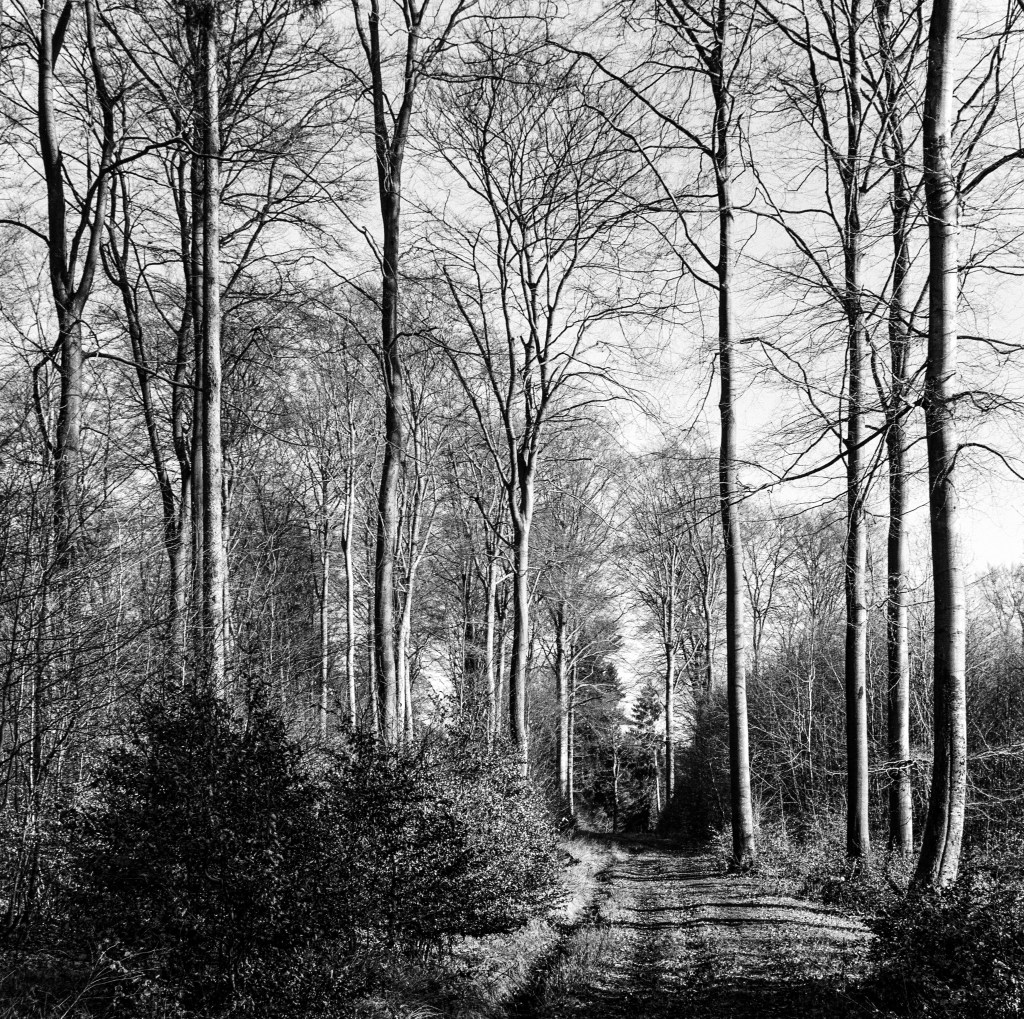
Beech forest in winter (Zeiss Ikon Super Ikonta I/B (532/16) coated Zeiss-Opton Tessar, Kodak Tri-X 400, 1/200 sec and f/16)
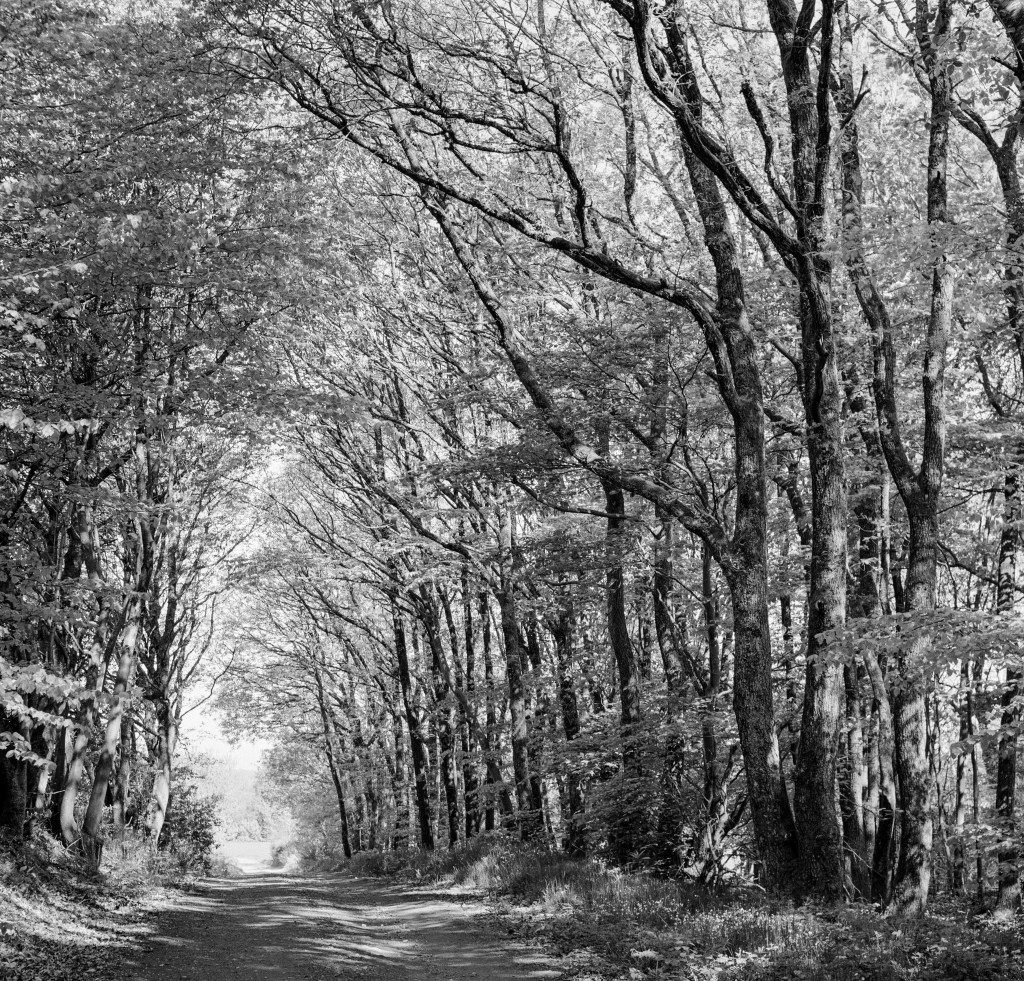
Hiking trail (Zeiss Ikon Super Ikonta III (531/16) CZ Tessar, YG filter, Ilford HP5 Plus 400, 1/10 sec and f/16, tripod)
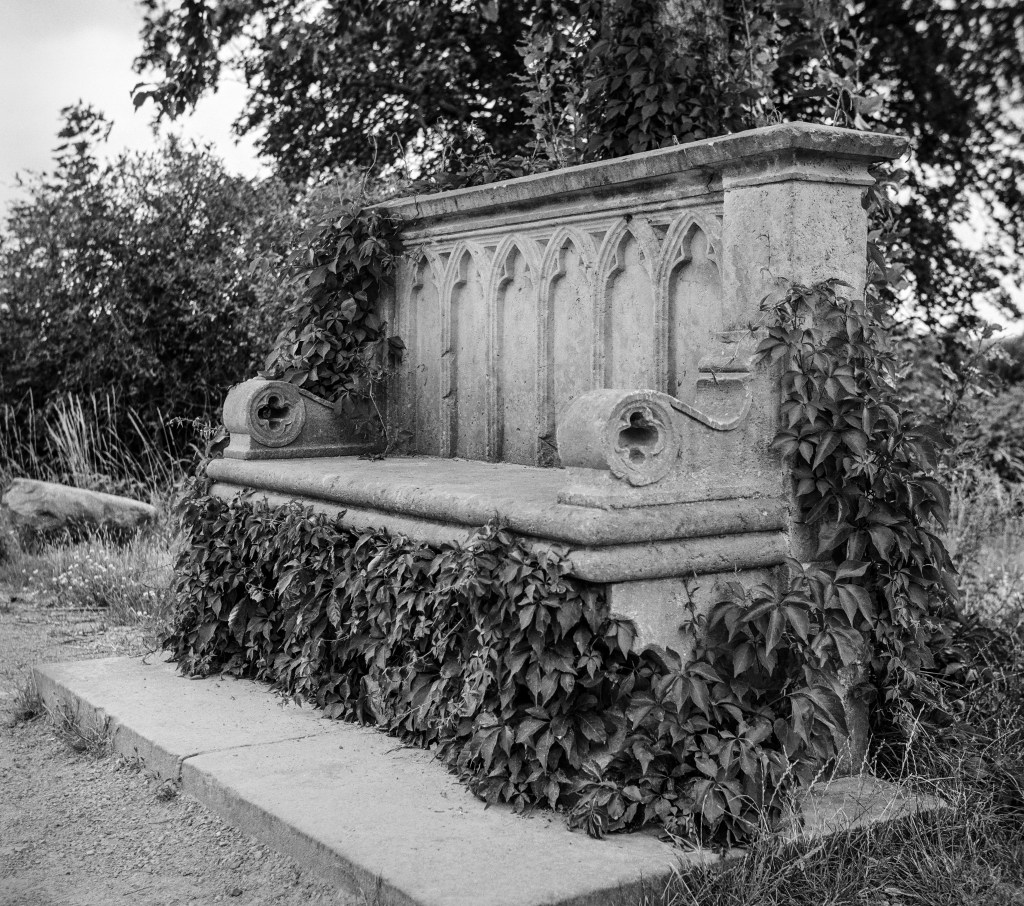
Babelsberg Palace Park, Potsdam (Zeiss Ikon Super Ikonta III (531/16) Novar, Ilford HP5 Plus 400, 1/200 sec and f/11)
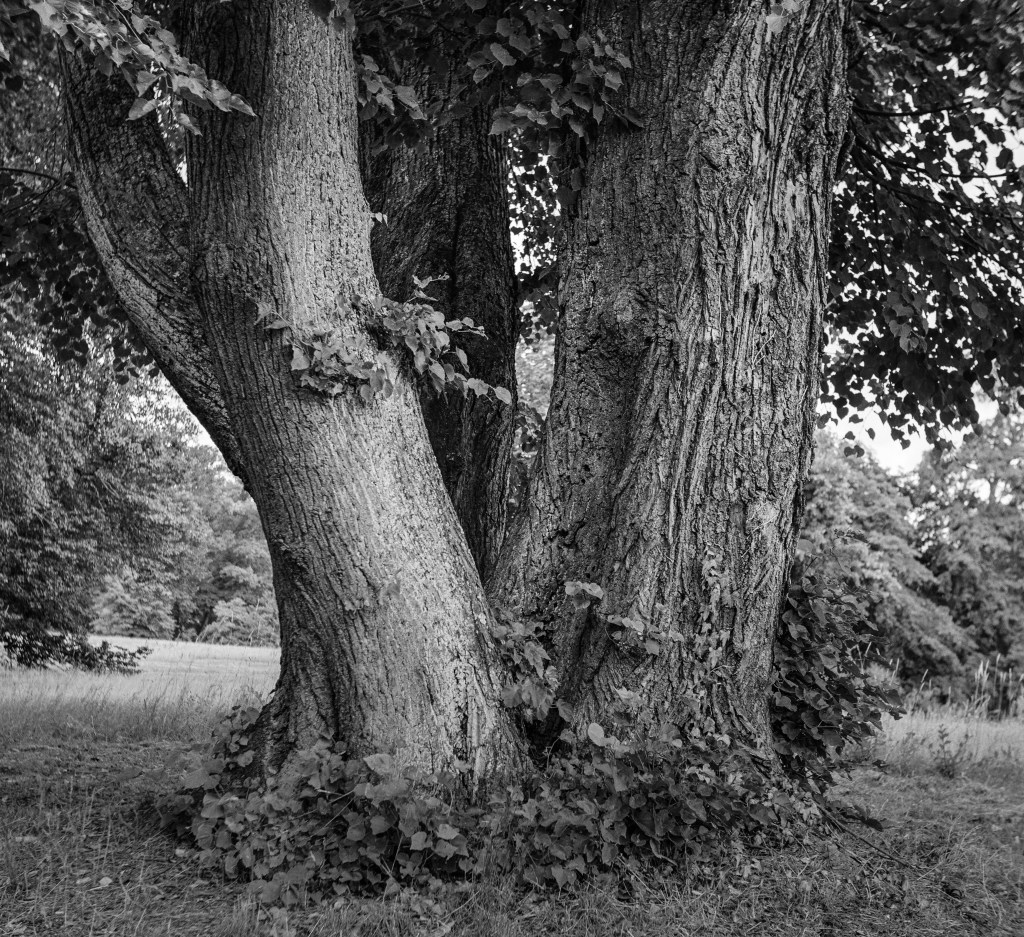
Babelsberg Palace Park, Potsdam (Zeiss Ikon Super Ikonta III (531/16) Novar, Ilford HP5 Plus 400, 1/200 sec and f/8)
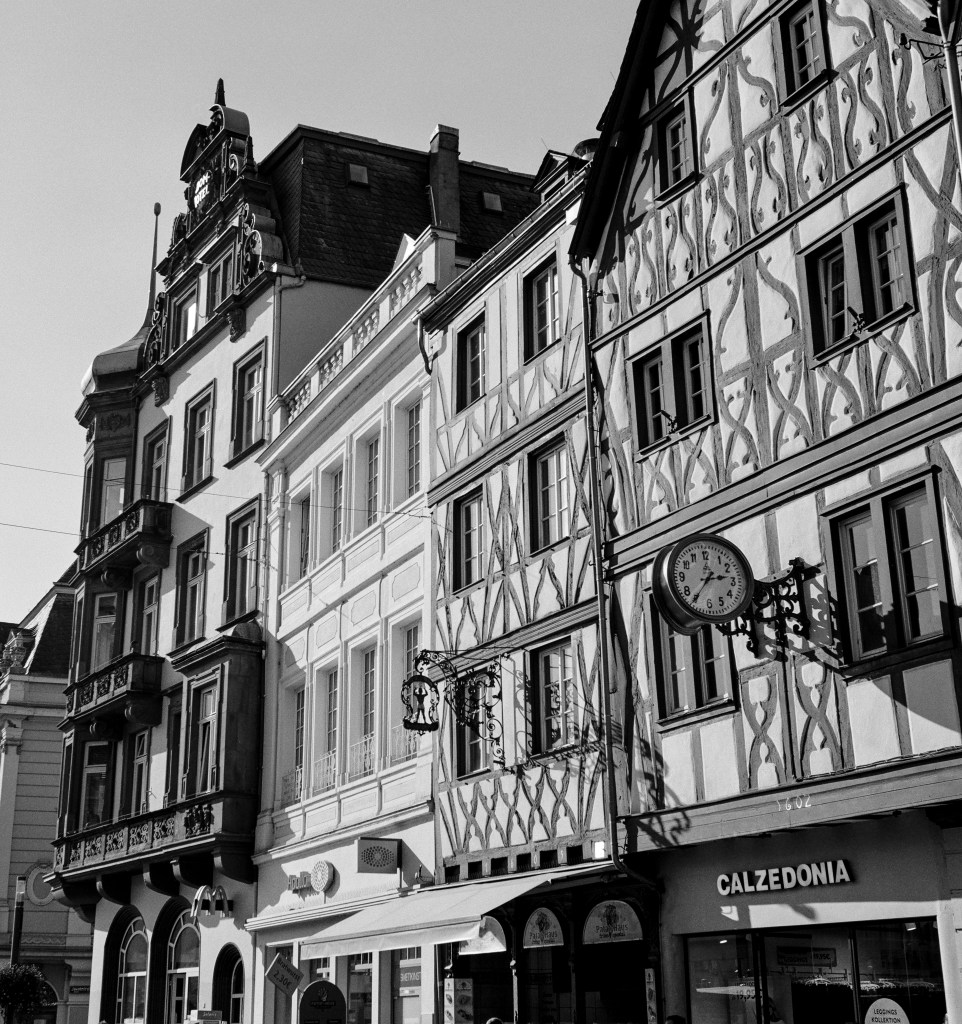
Main Market, Trier (Zeiss Ikon Super Ikonta III (531/16) Novar, Ilford HP5 Plus 400, 1/250 sec and f/16)
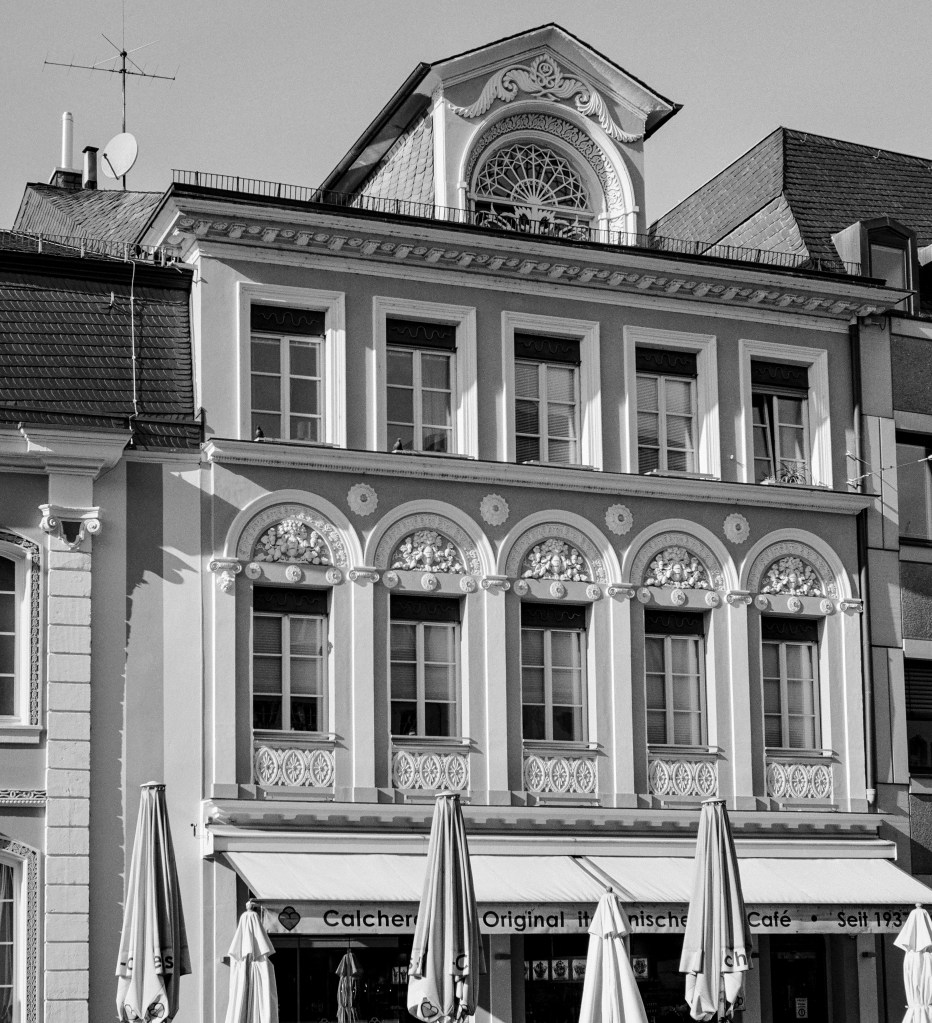
Ice cream parlor, Trier (Zeiss Ikon Super Ikonta III (531/16) Novar, Ilford HP5 Plus 400, 1/250 sec and f/16)
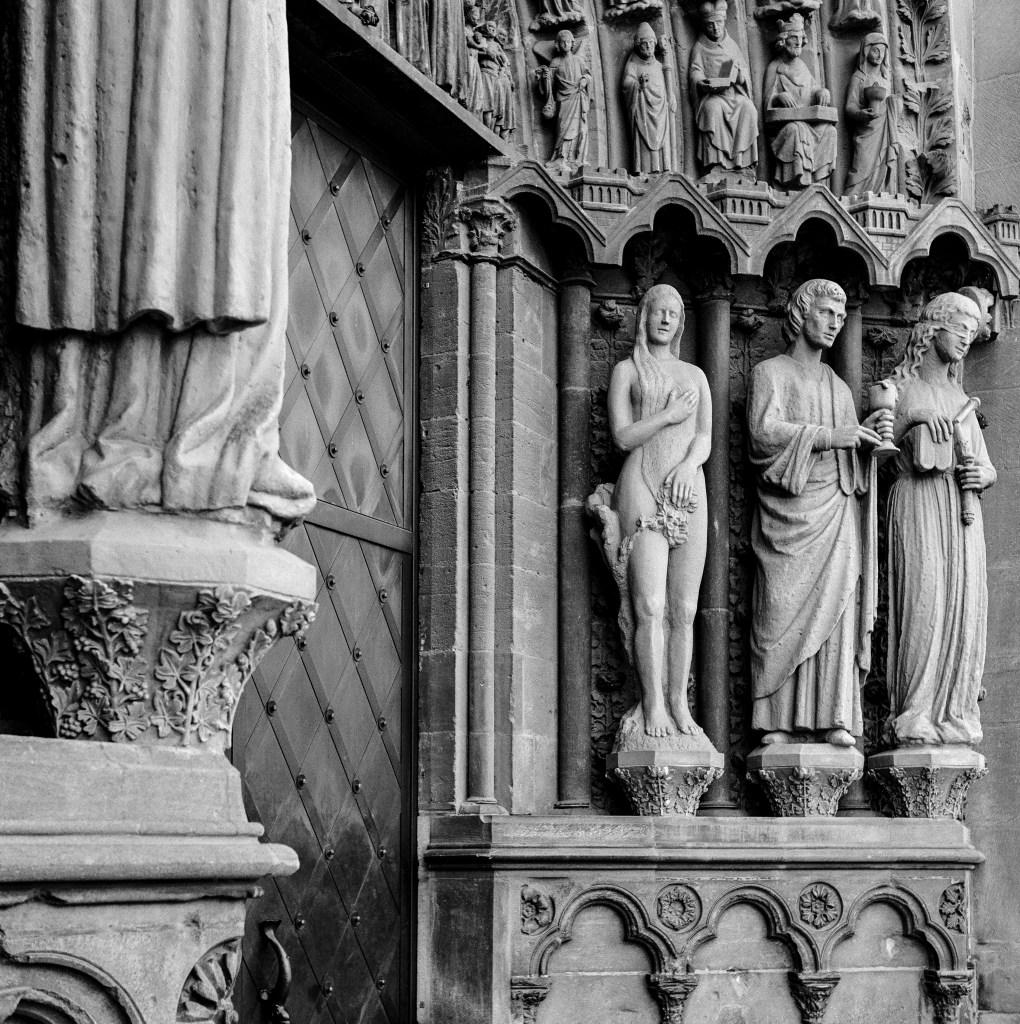
Church of Our Lady (Liebfrauenkirche), Trier (Zeiss Ikon Super Ikonta III (531/16) Novar, Ilford HP5 Plus 400, 1/00 sec and f/16)
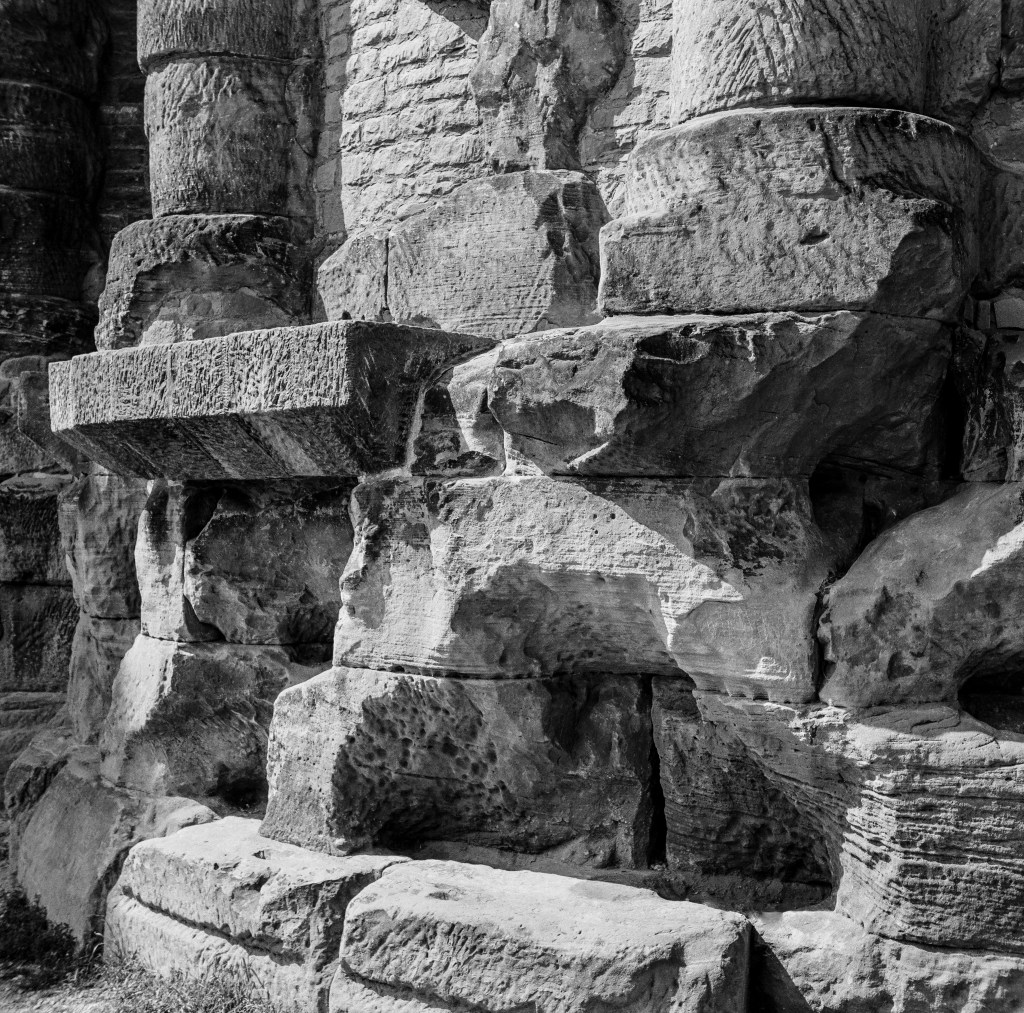
Roman stonework of Porta Nigra, Trier (Zeiss Ikon Super Ikonta III (531/16) Novar, Ilford HP5 Plus 400, 1/100 sec and f/16)
See also my flickr photo gallery: https://www.flickr.com/photos/165607631@N07/
 Old Glass