
The Foitzik-Kamerawerke were founded in 1945 in Lübeck (Germany) by engineer Karl Foitzik (1909-1955) as one of the many post-war German camera manufacturers. In 1950 the factory reopened in Trier (Germany) and began its production in 1951. Foitzik himself took part in the development of cameras. After troubles with the quality of the lenses produced by Steinheil and other lensmakers, the Foitzik Company took over the Optische Werkstätte Janetzki in 1953, then producing its own lenses. Starting with 20 employees, in its heyday the company employed about 150 people. The warehouses Kaufhof and Quelle sold Foitzik’s cameras and exports went to 60 countries. The company was closed in 1958, but the decline already began 1955 with Foitzik’s sudden death in a car accident. Another reason to cease the production was the strongly increasing Japanese competition.
The Foitzik Company produced various 35 mm film and 120 6×6 format folding cameras. The Foitzik Foinix is a lightly-constructed and well finished 120 film folding camera with 6×6 format, typical of the era. Name variants of the Foinix are “Atlantic”, “Reporter”, “Ori”, and “Orito”. Various combinations of lens and shutter brands exist, offering different ranges of apertures and shutter speeds. Around 1954, a Foinix version with an uncoupled rangefinder named “Mess-Foinix” appeared (“mess” from “messen” is the German term for “measure”). The rangefinder is a conventional split-image spot operated by a thumbwheel on the top deck with distance readout.
As a photo amateur being interested in the history of photography and living nearby the city of Trier (the production site of the Foitzik Company at its time), I came across this camera through Alfred Schmitt, Konz-Niedermennig. He had used a copy of the Mess-Foinix rangefinder camera in the civil engineering department of the city of Trier for the documentation of construction projects. Alfred gave me his camera, which is fully operational.
The images of the coated triplet lens are somewhat pictorial: quite sharp in the center and visibly blurred at the borders and the corners (particularly the corner top right). With the unsharp outer zones the viewer’s eye is focused for the mid zones and the surrounding part adds a kind of blurring vignette to the picture – quite different from the bokeh caused by a small depth of field.
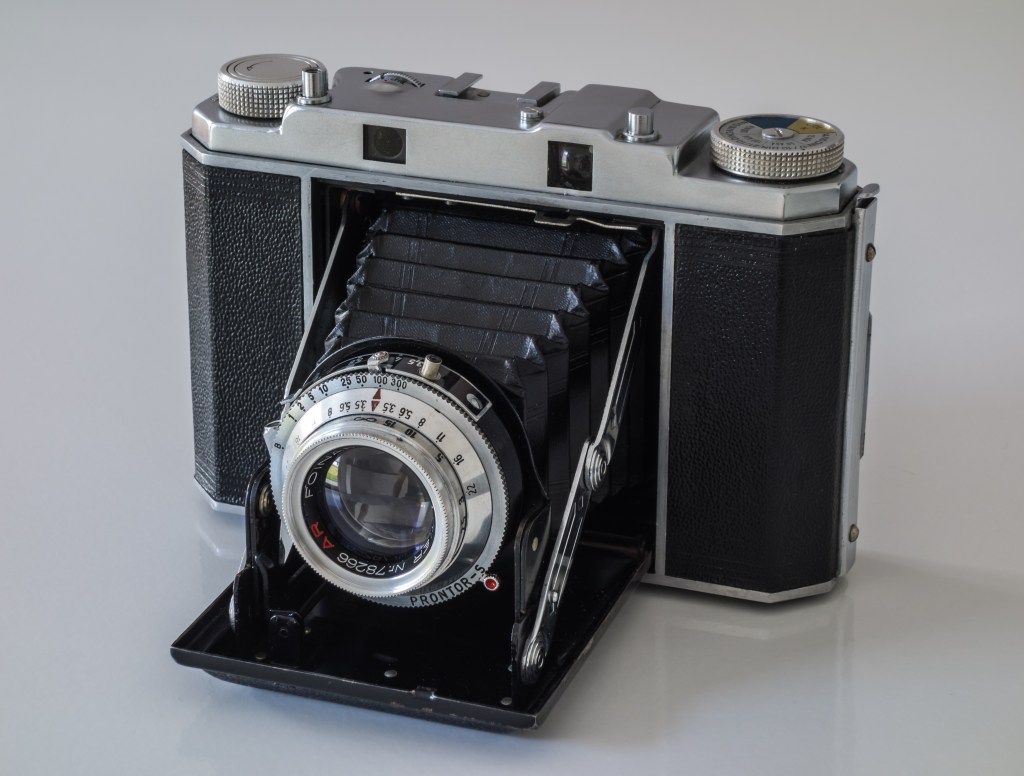
Foitzik Foinix (Mess-Foinix) with Foinar f/3.5 75 mm and Prontor-S shutter
Sample pictures
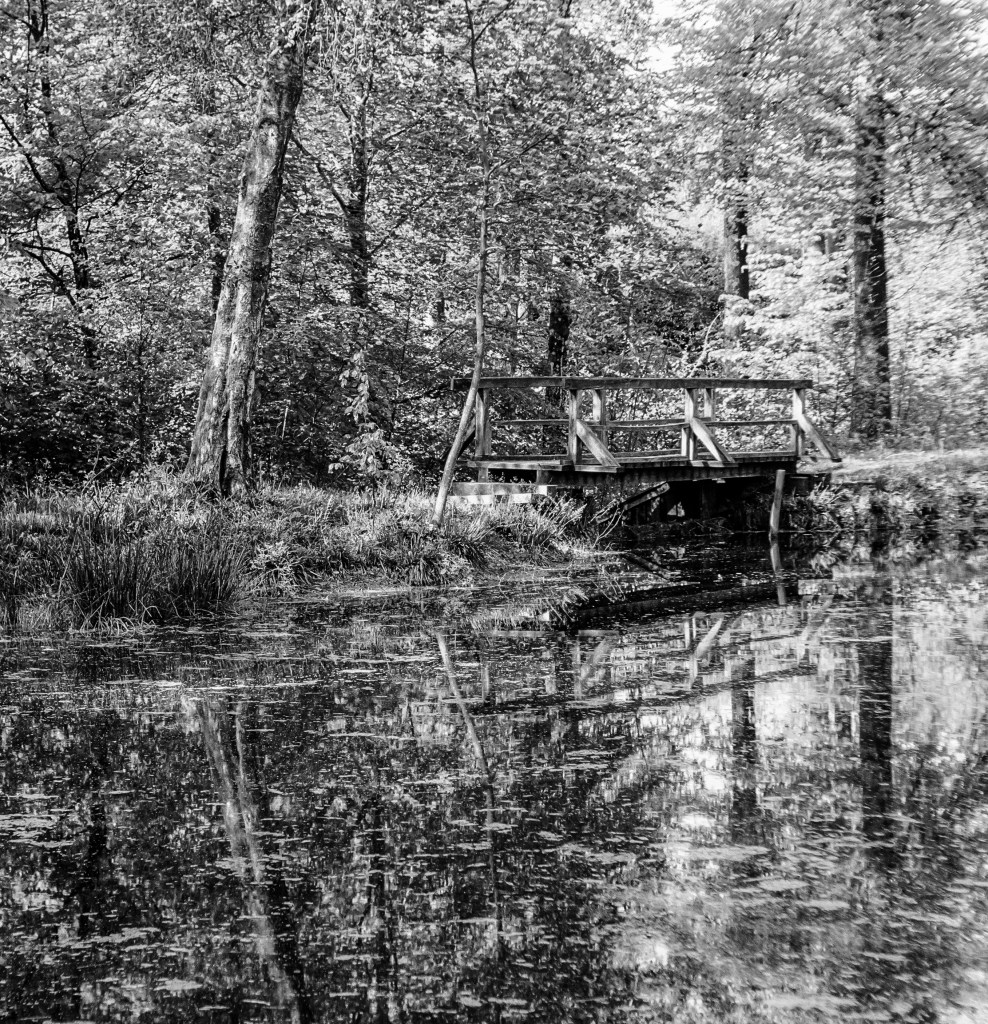
Forest pond (Mess-Foinix, Kodak Ektar 100, 1/50 sec and f/16, tripod)
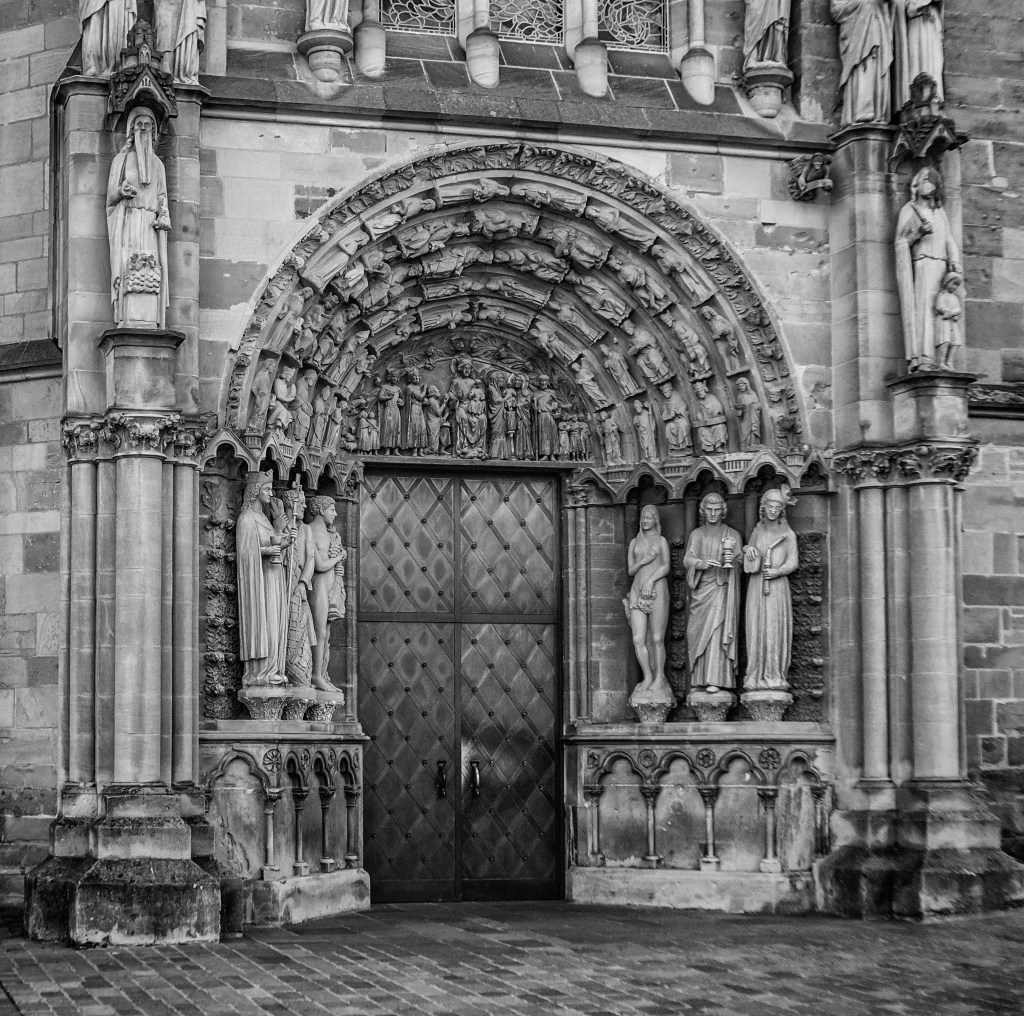
Doorway of Church of Our Lady, Trier (Mess-Foinix, Kodak Ektar 100, 1/100 sec and f/11, tripod)
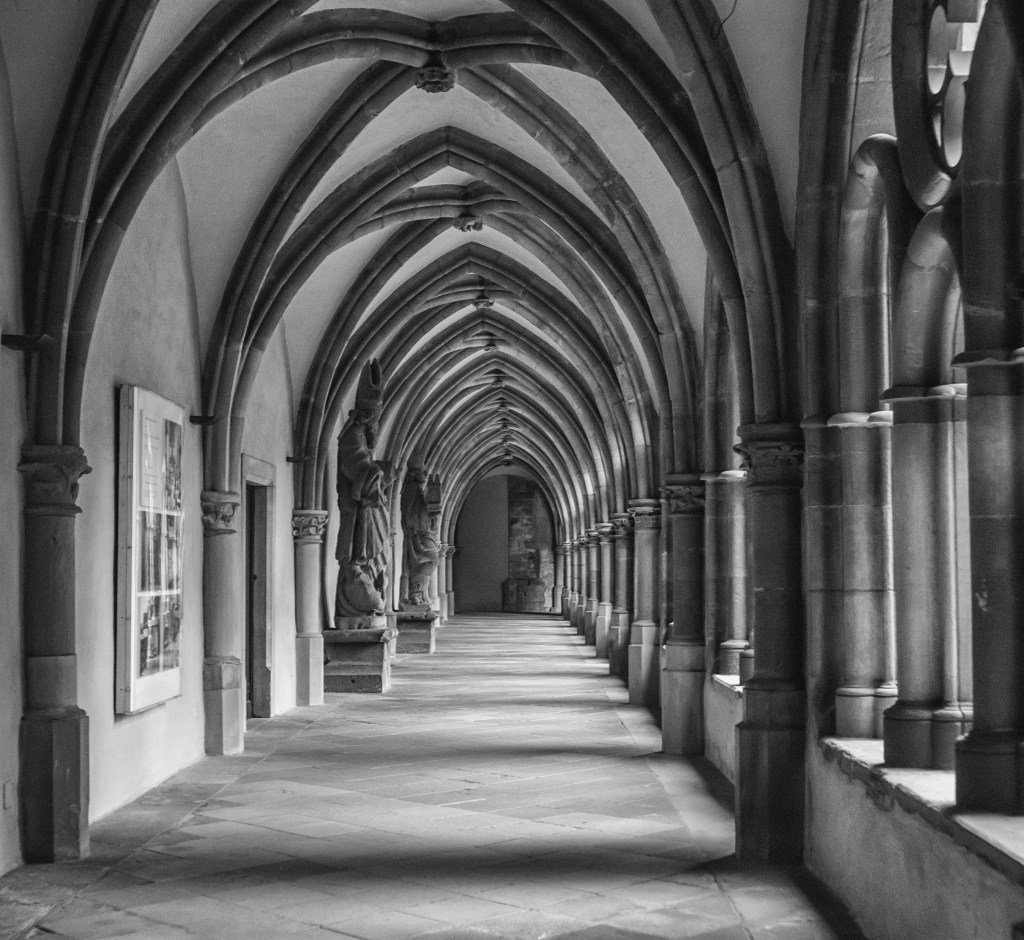
Cloister of High Cathedral St. Peter, Trier (Mess-Foinix, Kodak Ektar 100, 1/10 sec and f/16, tripod)
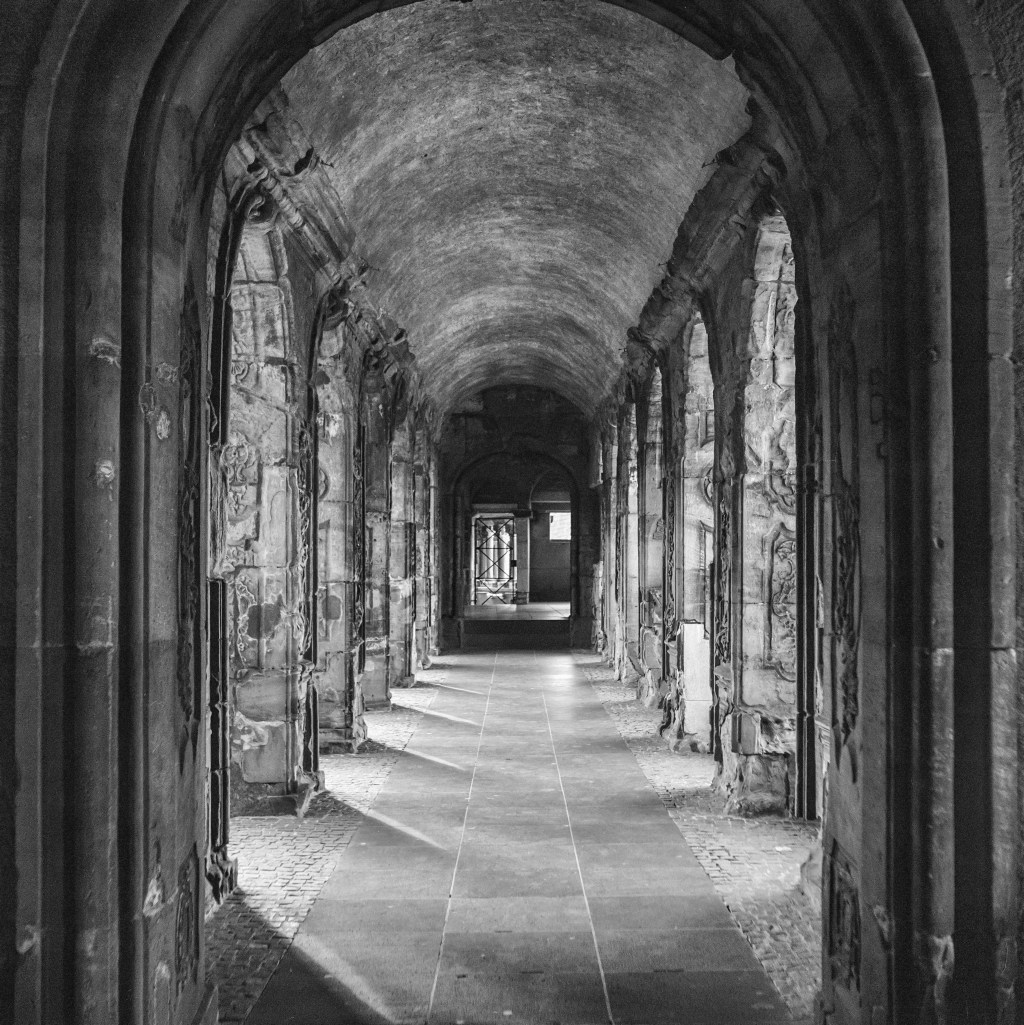
Porta Nigra, Trier (Mess-Foinix, Kodak Ektar 100, 1/10 sec and f/16, tripod)
At the beginning of my medium format film photography, I preferred to use color negative film rather than b&w negative film for achieving b&w pictures. I did this for two reasons: (1) The scanning software enables to remove dust and scratches via the digital ICE function, which is not possible with b&w film. (2) The digital editing tools enable to apply color filters for modifying the gray tones to my liking. Meanwhile, I prefer to use classic b&w negative film, particularly classic cubic crystal film like Ilford HP5 for its large dynamic range and soft look. Also, I like the grain of classic b&w negative film, because it adds some texture and thereby a further dimension to the pictures and avoids the sterile and plastic look of many digital pictures.
See also my flickr photo gallery: https://www.flickr.com/photos/165607631@N07/
 Old Glass