
The history
The Holga camera was designed by Lee Ting-mo, a former employee of the Yashica Hong Kong factory. The camera was manufactured in Hong Kong since 1982 and was intended as an inexpensive mass-market camera for the Chinese working class. At that time 120 film was by far the most popular format in the country. But the growing Chinese middle class soon purchased the more expensive newly imported 35mm film cameras, making the medium format Holga camera obsolete. With no future in its home market, the manufacturers began to distribute the Holga outside China. Instead of resigning themselves, they took those imperfections and turned them into reasons to buy, when marketing Holgas in the Western Countries.
The unpredictable toy camera with its dreamy images evolved to become a symbol of resistance to the brilliant, razor-sharp, and clinically perfect images produced by the cameras of the late 20th century. Photographers began using the Holga for its impressionistic and surrealistic image look. But a saturated toy camera market led to waning sales. In November 2015, Tokina had shut down the factory that produced Holga cameras, ending the production of these toy camera. However, the inventor Lee Ting-mo had kept the tooling for the 120 models as a souvenir. With these, a Chinese company called Sunrise put the Holga 120N back into production in 2016 and the Holgas were once again available. The 120N model is the classic, default Holga design, but there are many more versions that have additional features, which can be identified by additional letters in the model name.
The camera
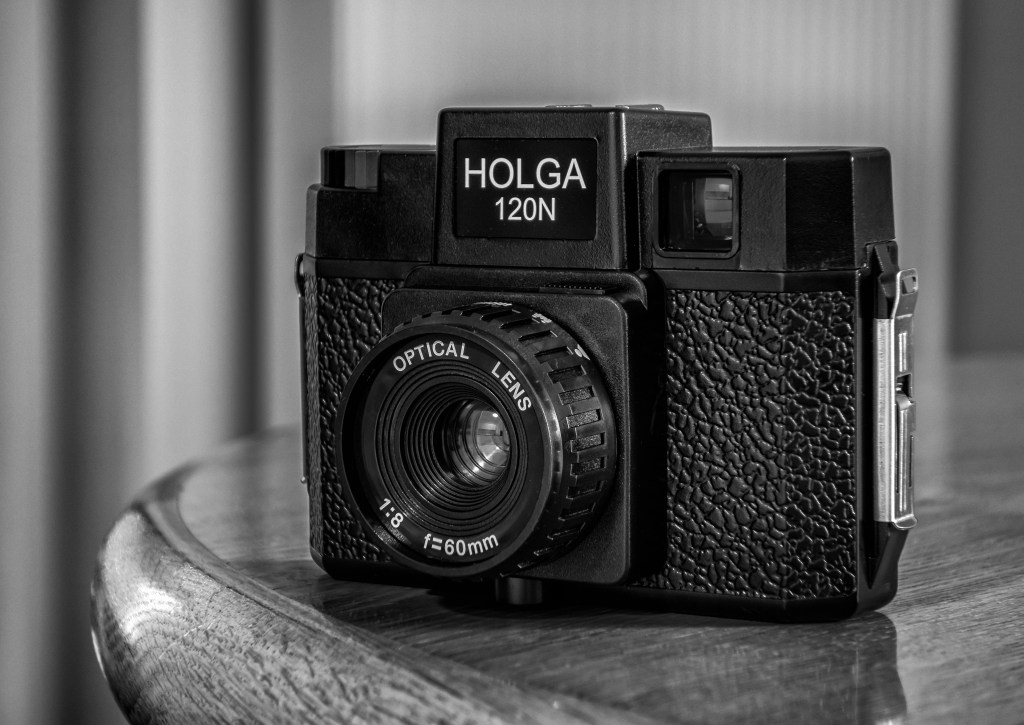
Designed as a mass-market product, the camera had to be as inexpensive as possible, which implied minimal technical features: minimal focusing ability, minimal settings for aperture and shutter speeds, minimal sharpness outside the center of the pictures, and minimal light seals. As a consequence, most parts of the camera are made of plastics. Only the hot shoe, the film back release latches, and the shutter spring are metal. The Holga 120N is a medium format point-and-shoot camera equipped with a plastic meniscus lens of 60 mm focal length (corresponding to a focal length of about 35 mm of a 35 mm camera), two aperture settings (about f/8 and f/11) and a rotary shutter with two shutter time settings (about 1/100 sec and a bulb mode). The available two aperture settings and the fixed shutter speed require loading exposure speed ASA 100 films only on sunny days and ASA 400 films in the shadows and on cloudy days. Interchangeable film masks enable exposing alternatively 6×6 cm or 4.5×6 cm negatives.
The quirks
As a consequence of the low-cost construction and the simple meniscus lens, Holga pictures usually display many kinds of aberrations and distortions:
- The viewfinder shows a much narrower field of view than the lens actually covers (only about 70% of the negative area). Also, the viewfinder is off the center, since it is showing subjects from a different angle than the lens. But there is no correction of this parallax error. Moreover, the 4.5×6 cm format is not marked in the viewfinder.
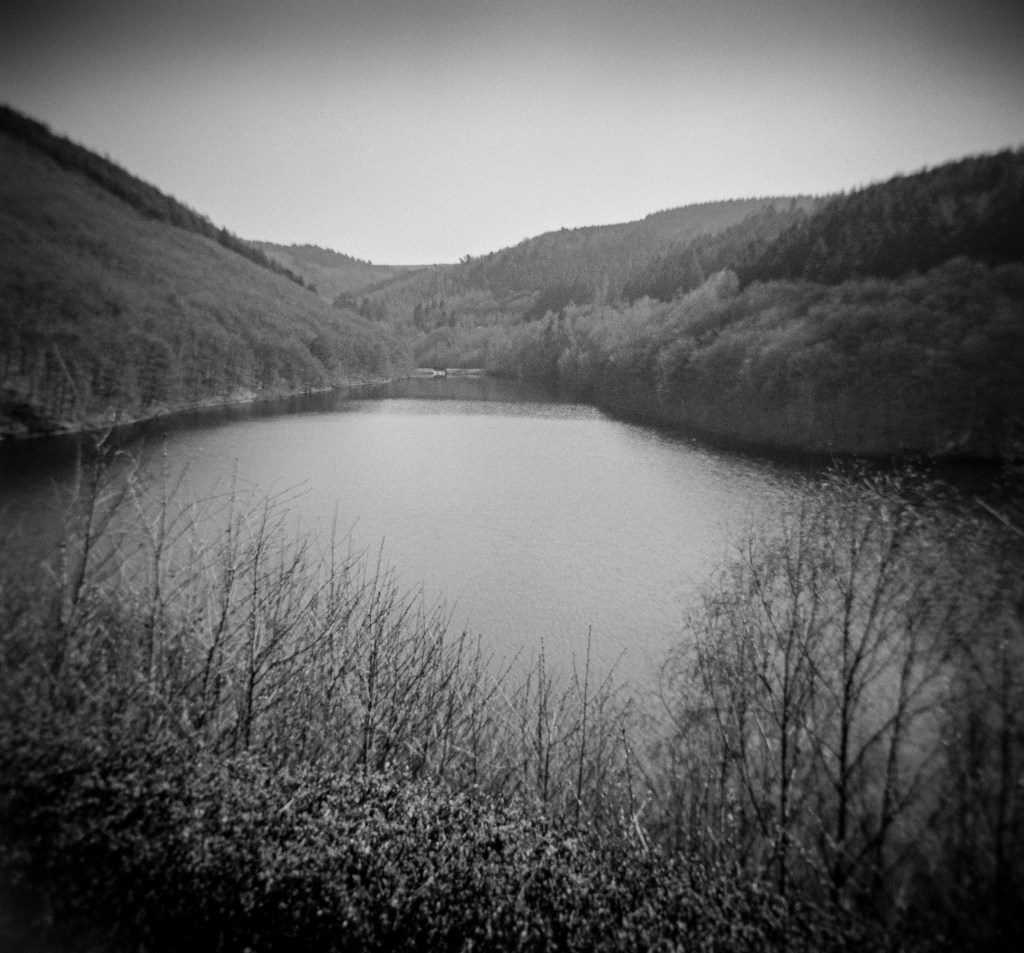
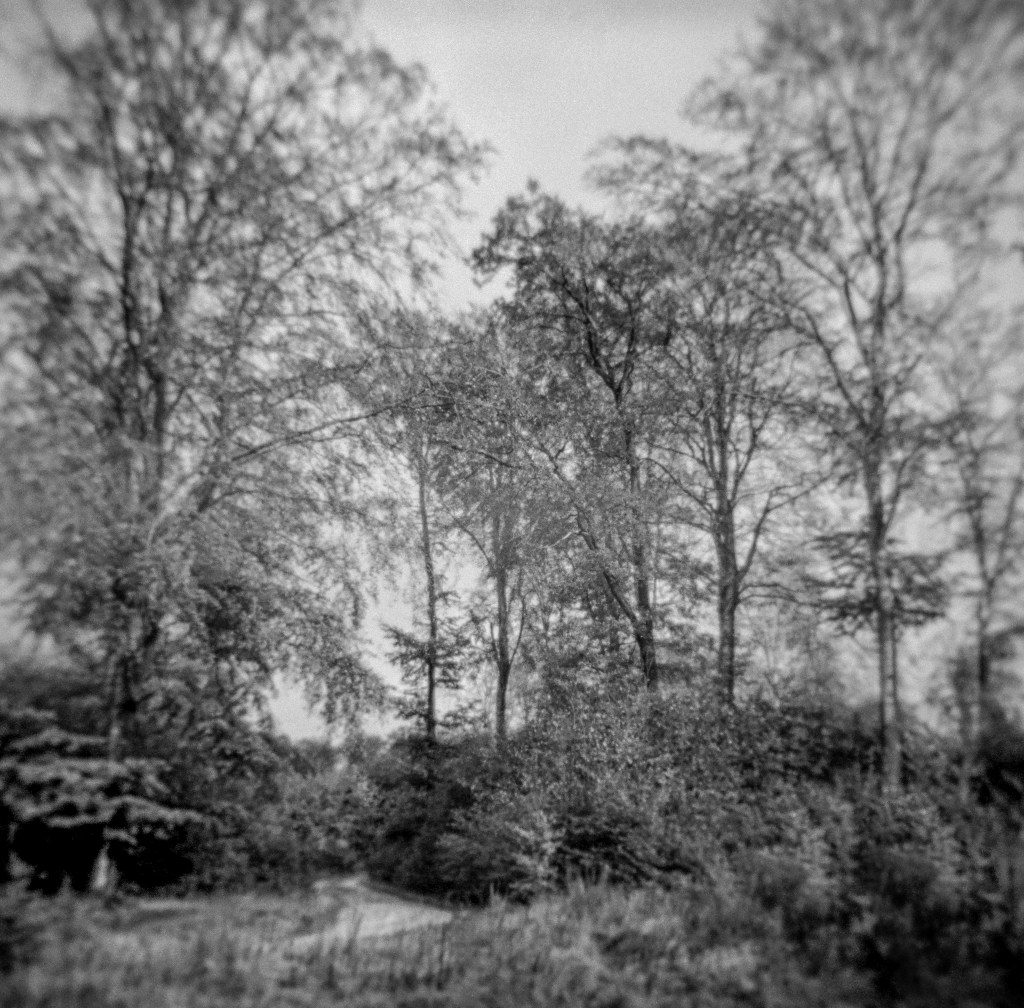
- There is some notable sharpness in the center of the frame, if the focus is set right. But the sharpness falls off considerably to the boarders of the frame and gives a very focused view. Also, the lack of lens coating implies reduced overall contrast and micro-contrast.
- The slightly wider than the normal focal length and smaller than required image circle produces heavy vignetting. The exposure fall-off is fast and its characteristic depends on the individual camera.
- The color rendering of the plastic meniscus lens allows no faithful color reproduction. Therefore, color photos from a Holga have a very distinct look.
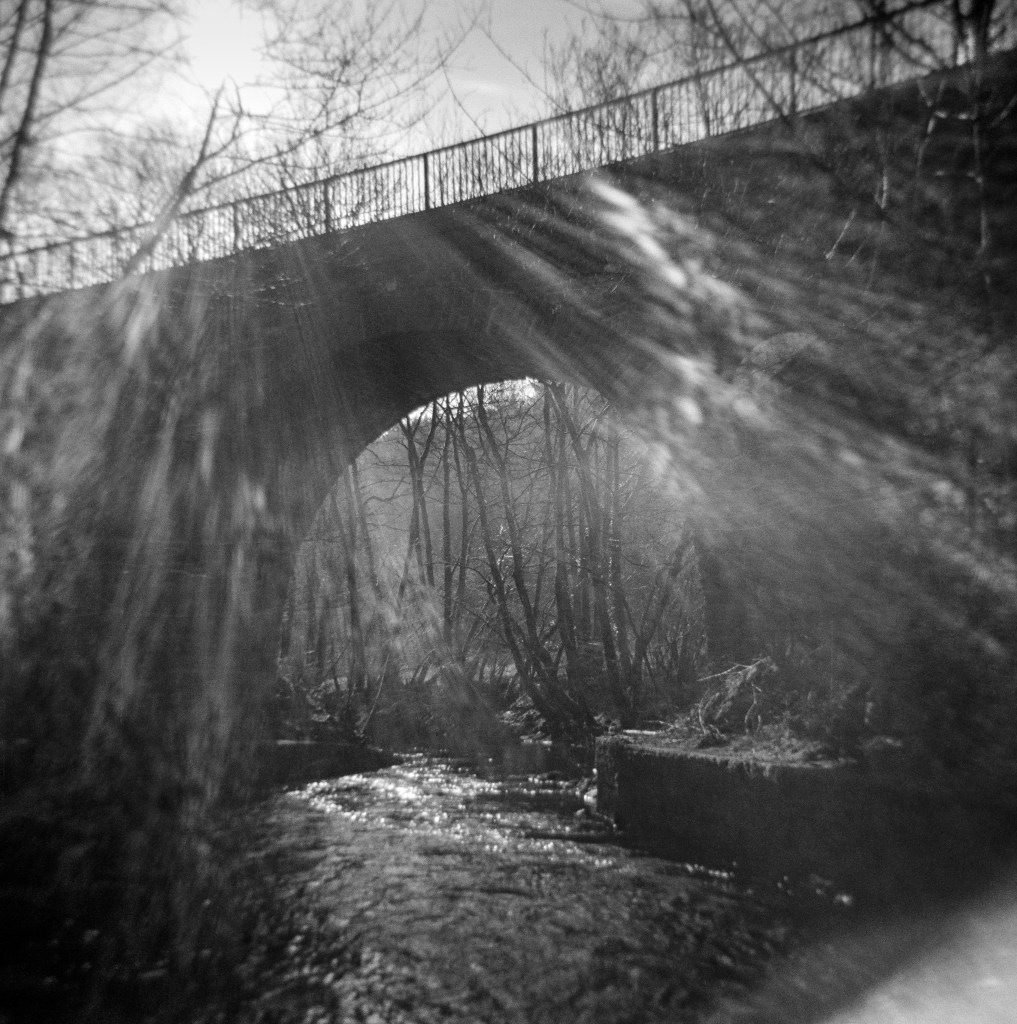
- Each camera shows individual and unpredictable light leaks. If they are not welcome as part of the typical Holga look, it is recommended to tape up all seams that may allow light to leak in: particularly around the camera back and through the red film window. Also, the lens cap should be placed on the lens between the shots to avoid light leaking through the shutter mechanism.
Why?
The camera’s limitations have made it a cult camera, and Holga photos have won awards and competitions in art and news photography. Photographers like the Holga for its lack of precision and inexpensive qualities, which forces them to concentrate on creative vision rather than increasingly complex and expensive camera technology. Most often, technical perfection is not essential for a photograph. Life isn’t perfect at all and photos may absolutely reflect this!
The Holga 120N camera
Sample pictures

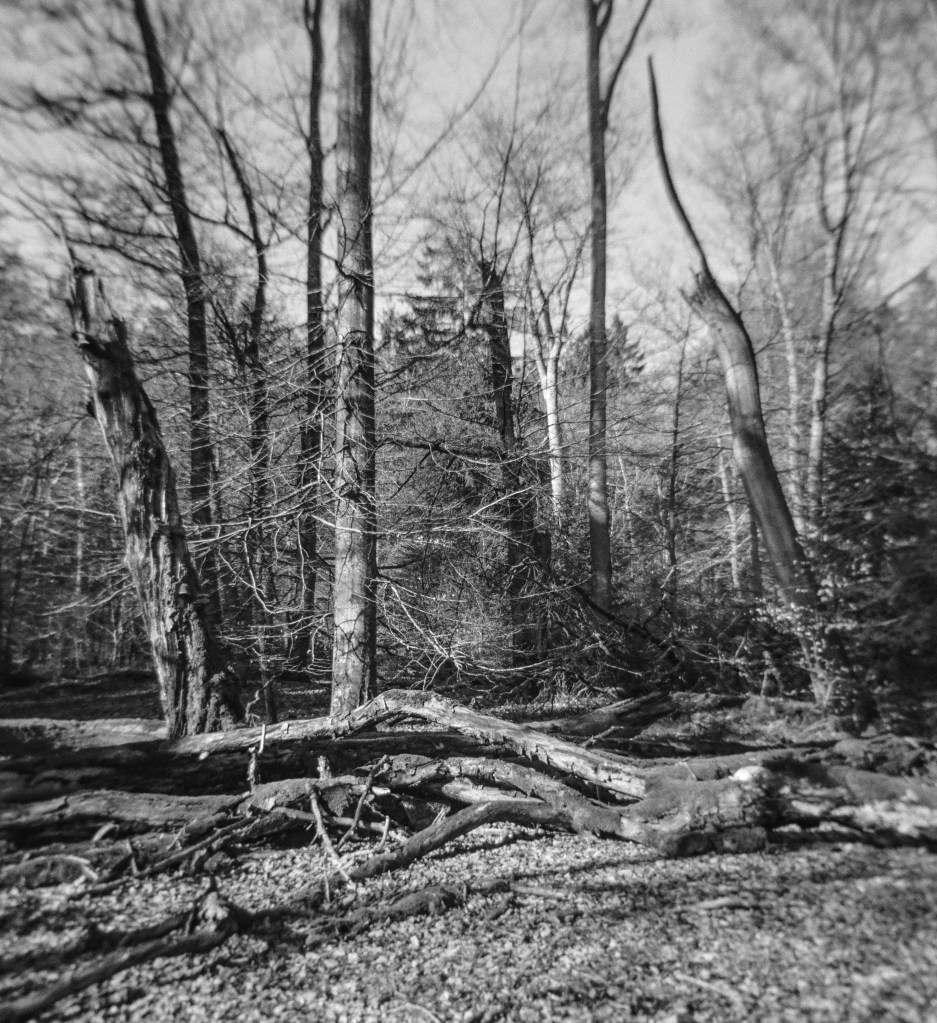
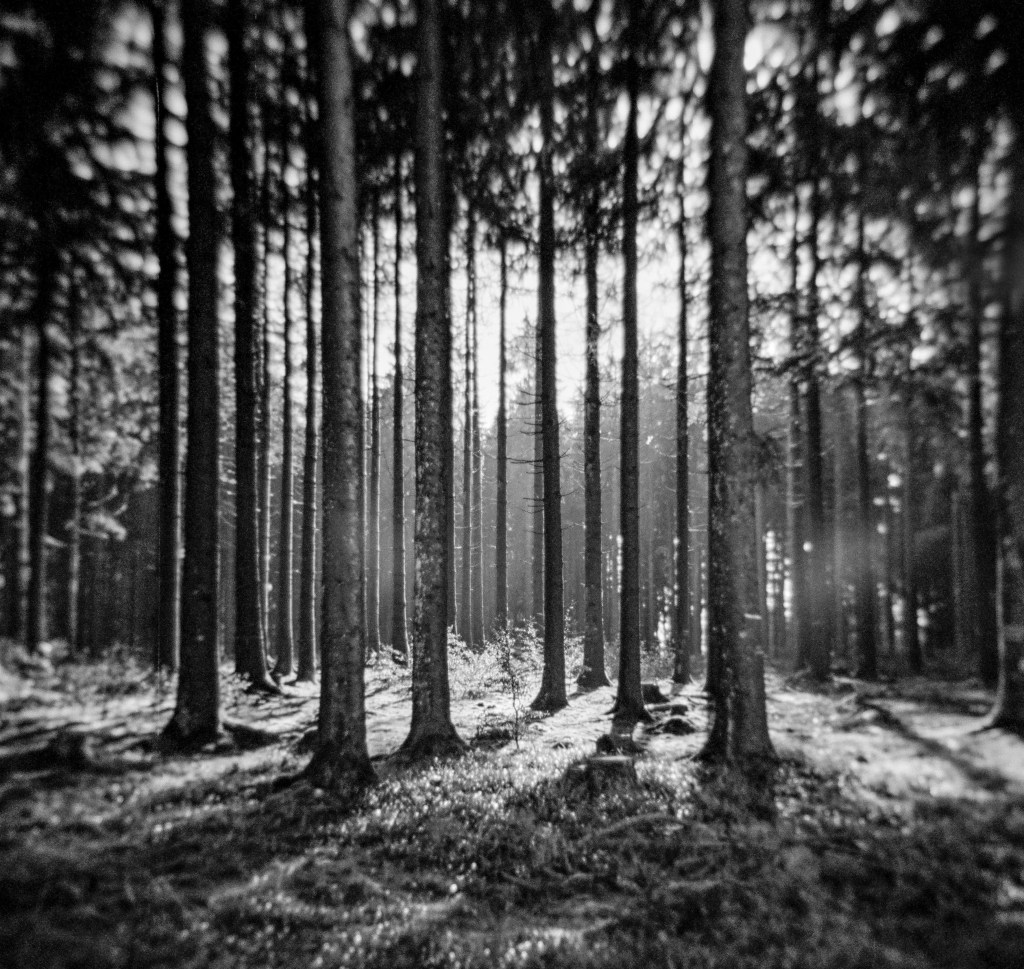
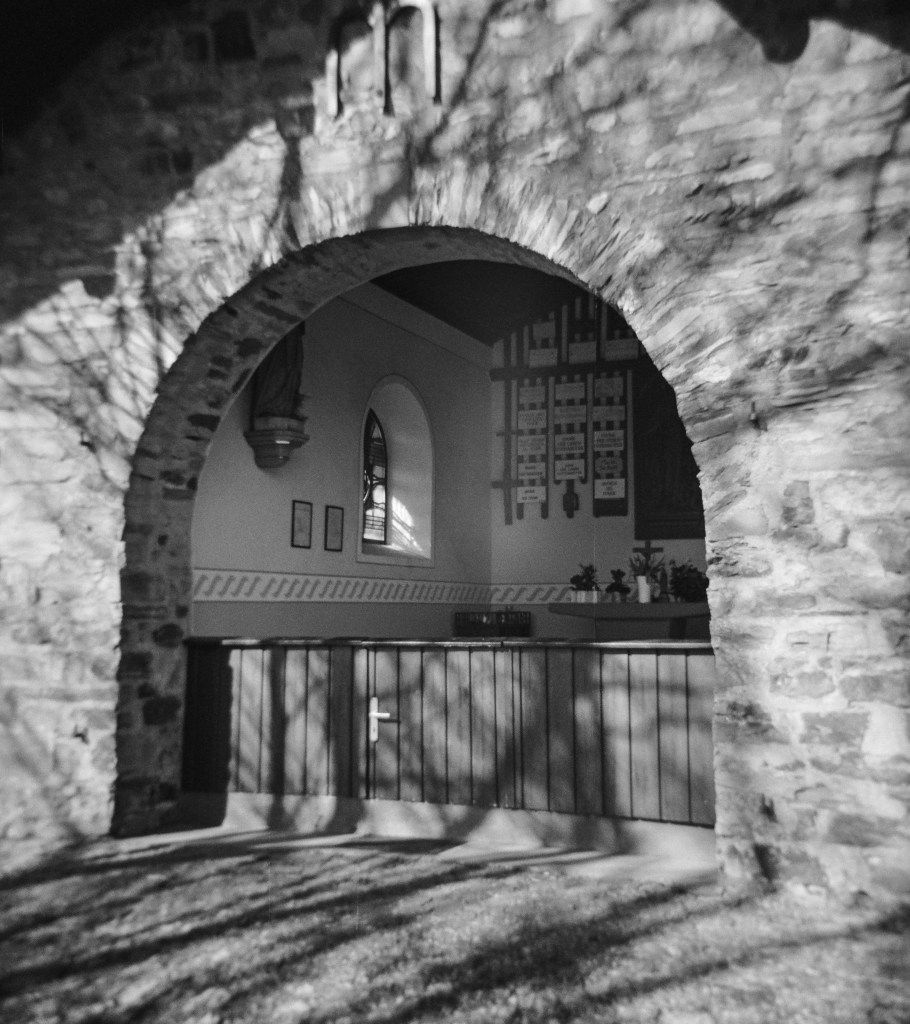
See also my flickr photo gallery: https://www.flickr.com/photos/165607631@N07/
 Old Glass