
The basic concept of folding cameras is a flexible structure between camera body and lens, so that the camera can be folded up. The bellows as the folding element makes folders compact, but is also the weak point of the design by developing light leaks. Folders have to be opened by pressing a button on the top plate. Powerful springs release the lens cover and push the lens into working position. Folding cameras deliver medium format in a truly pocketable form. Their compact size makes them great travel cameras. Last but not least, using vintage folder cameras means experiencing a fascinating period of the history of photography.
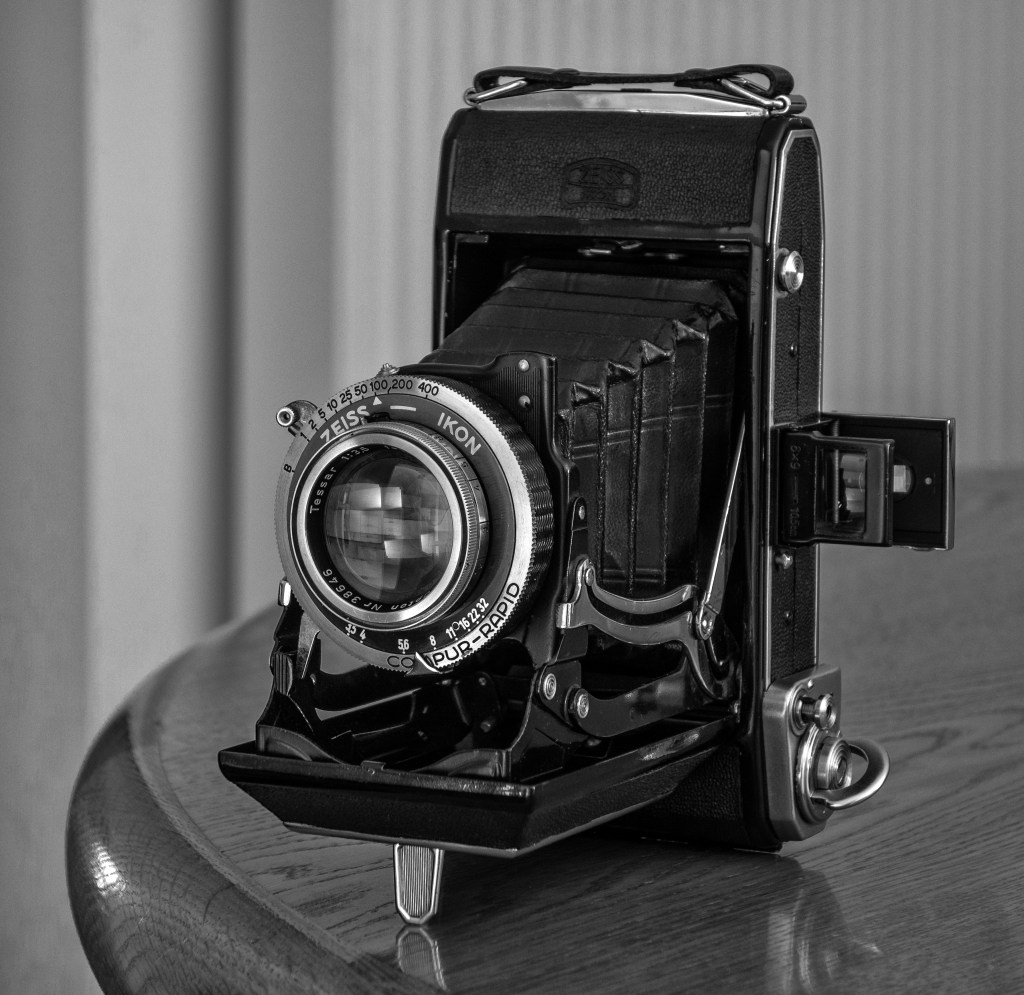
Zeiss Ikon Ikonta C (521/2) 6 x 9 cm folding camera
The lens shutter assembly at the front standard provides rings for focusing, for selecting the aperture and the shutter speed and a lever to cock the shutter. The materials used were chrome, brass, steel and sometimes also aluminum, partially painted with black enamel and covered with the finest leather. The parts were designed on drawing boards, assembled by hand and fastened with rivets and screws. It’s impressive to hold such a piece of well-preserved history in hand.
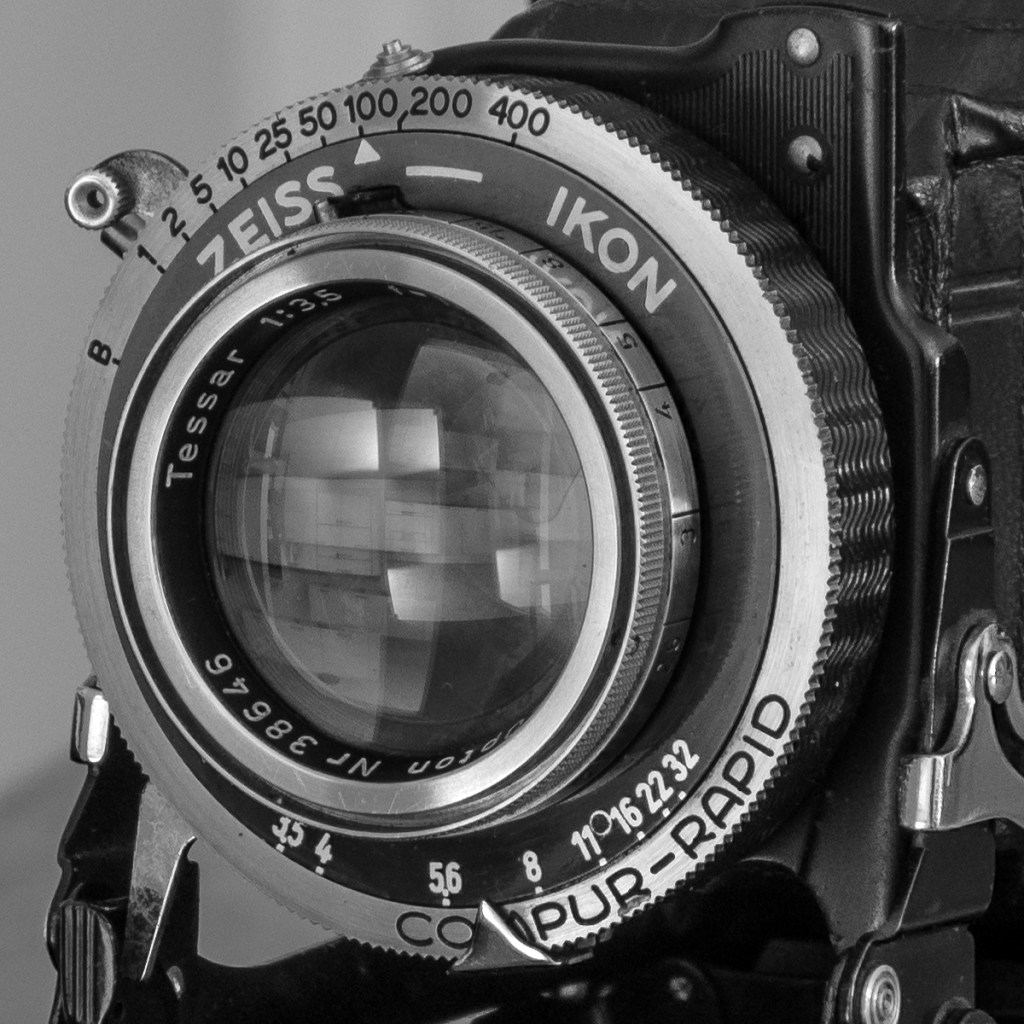
Lens shutter assembly of Zeiss Ikon Ikonta C (521/2)
As a result of the big negative size, medium format folders give far more resolution than any 35mm camera, along with very smooth images (a huge amount of detail with finer grain and better tonality). The results look very clean and sharp, with a smooth transition into the out-of-focus area and a lovely background blur when the aperture is set wide open. Compared to the clinical data of digital sensors, film emulsions deliver more imperfection and therefore appear less sterile. The texture of the grain and the tone of the color produce a certain feel or look, that digital photos lack. High-resolution scans of large negatives deliver an ideal basis for digital picture editing. But you get only between 8 and 16 shots per film roll, depending on the film format. However, this has the advantage of being forced to photograph more attentively and carefully.
My philosophy
In photography all depends on personal preferences and taste and there is no philosophy for everybody. Some years ago, I became somewhat jaded by the bombardment through clinically perfect, razor sharp and overly brilliant high contrast images published in photographic magazines and posted in the web. Once I’ve changed from analog to digital photography for its perfection, and later changed back to film photography for its imperfection.
I use folding cameras mainly for two reasons: First, I enjoy to hold in my hands a piece of photographic history and great workmanship and second, I utilize the character of vintage lenses (old glass) for achieving a specific look and feel that I like. Originally, I’ve combined vintage lenses and lower contrast films as a means of controlling the contrast under harsh light conditions, as for example in a forest on a sunny day. Later, I began to appreciate the impressive tonal range of images taken in soft light and do not compensate for the lower contrast in post-editing.
In the past few years there has been a distinct tendency to more dramatic b&w images showing higher contrast. Analog images taken on classic film emulsions, particularly in combination with vintage lenses, are quiet and soft, rather than crying for attention. They shine through subtle tonality with a large array of gray nuances. The specific character of the various vintage lenses, reasonably and skillfully combined with the characteristics of thoroughly selected film stocks, deliver a multitude of possibilities for creating images that stand out against the huge mass of pictures taken and distributed every day.
 Old Glass
You must be logged in to post a comment.