
Photo galleries and photography discussion forums seem to show an increasing interest for pictures with the look of antique photographs. Accordingly, this has become an issue for picture editing and print services. Why do people like photos that look like they were taken around 1900 or 1950 rather than utilizing and enjoying the huge improvements going along modern films and lenses? Possibly, creating photos like those many decades ago is a way to relive the youth. But what are the specific characteristics of old fashion pictures, sometimes called “old look”, “retro look“ or “vintage look” pictures? Definitely, there are numerous factors that play into the “old look” of film-based photos: the nature and performance of the lens, the film characteristics, and the developing and printing techniques in the darkroom.
Basically, uncoated pre-war lenses show a different rendering compared to multi-coated newer optical constructions. The pictures are not as crisp as those taken with modern lenses. Old lenses are more transparent regarding blue light. As a consequence, the shadows with their large amount of bluish straylight are lifted and appear lighter, showing more detail. The overall contrast is lower and more balanced. Therefore, uncoated lenses are more tolerant with regard to high contrast scenes. Also, the atmospheric perspective is intensified by a lower definition of the far background – the opposite effect to the application of a red filter. The pictures taken with uncoated lenses normally show some kind of an aura around the contours. The highlights tend to creep into the shadows generating a beautiful glowing, in German sometimes called “Schmelz”. Not surprisingly, uncoated lenses are more prone to lens flares in direct light or back light, particularly when used without lens hood.
The performance of old lenses was limited by the amount of aberrations corrected through their optical construction and the kind (or lack) of lens coating leading to a distinct softness. Today, this softness is sometimes simulated by softening filters or some other kind of softening by placing diffusion material over the lens. A better way is to use a vintage camera fitted with an uncoated three or four element lens. Three element lenses (triplets) like Agfa Apotar or Zeiss Novar lenses are generally softer with more softness towards the boarders and the corners, particularly when used with the aperture wide open.
As for the film characteristics: The films used decades ago were generally slower and grainier than the films we use today. Also, they had much lower sensitivity to red light than modern films. To realize a distinct grain, classic films like Kodak Tri-X or Ilford HP5 with cubic grains are better suited than modern film emulsions with T-grains. Alternatively, Ilford Delta 3200 exposed at ASA 1600 delivers a distinct and wonderful grain. Finally, a slight sepia tone added in post editing or printing may help to increase the vintage effect.
Wide aperture
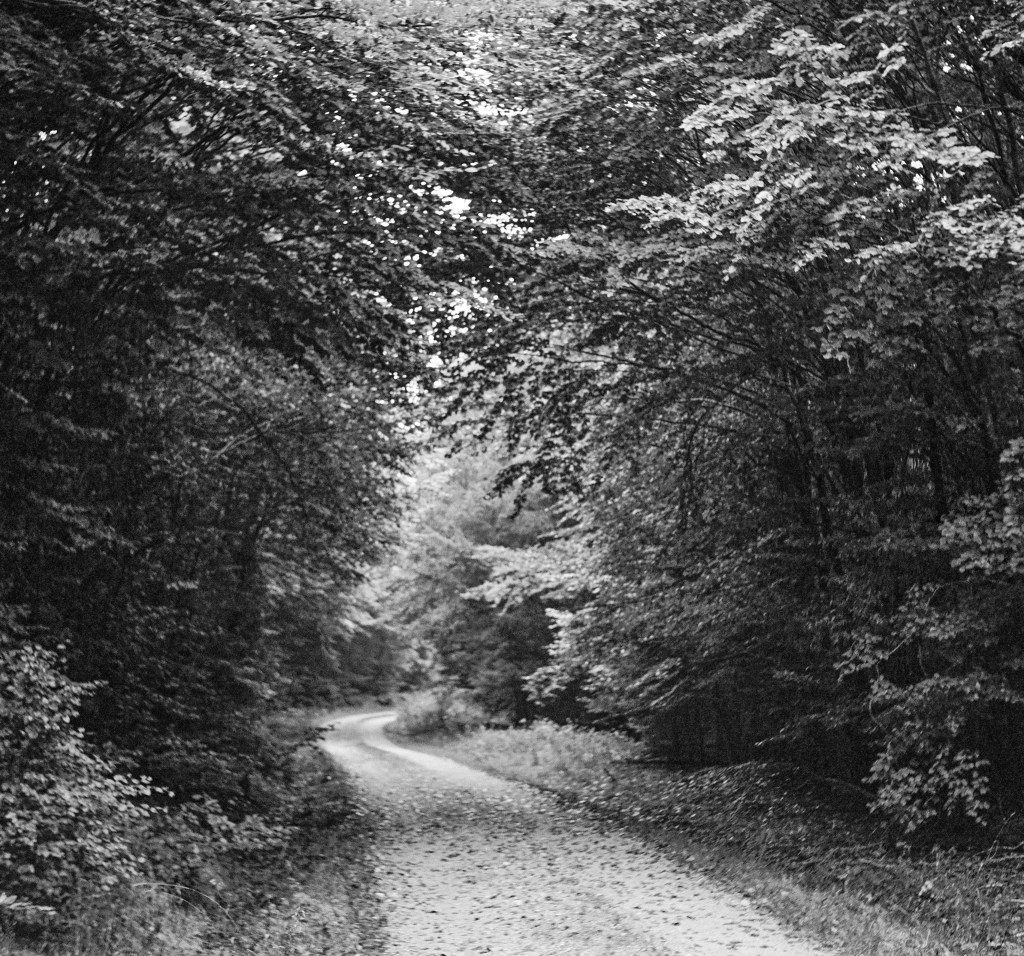
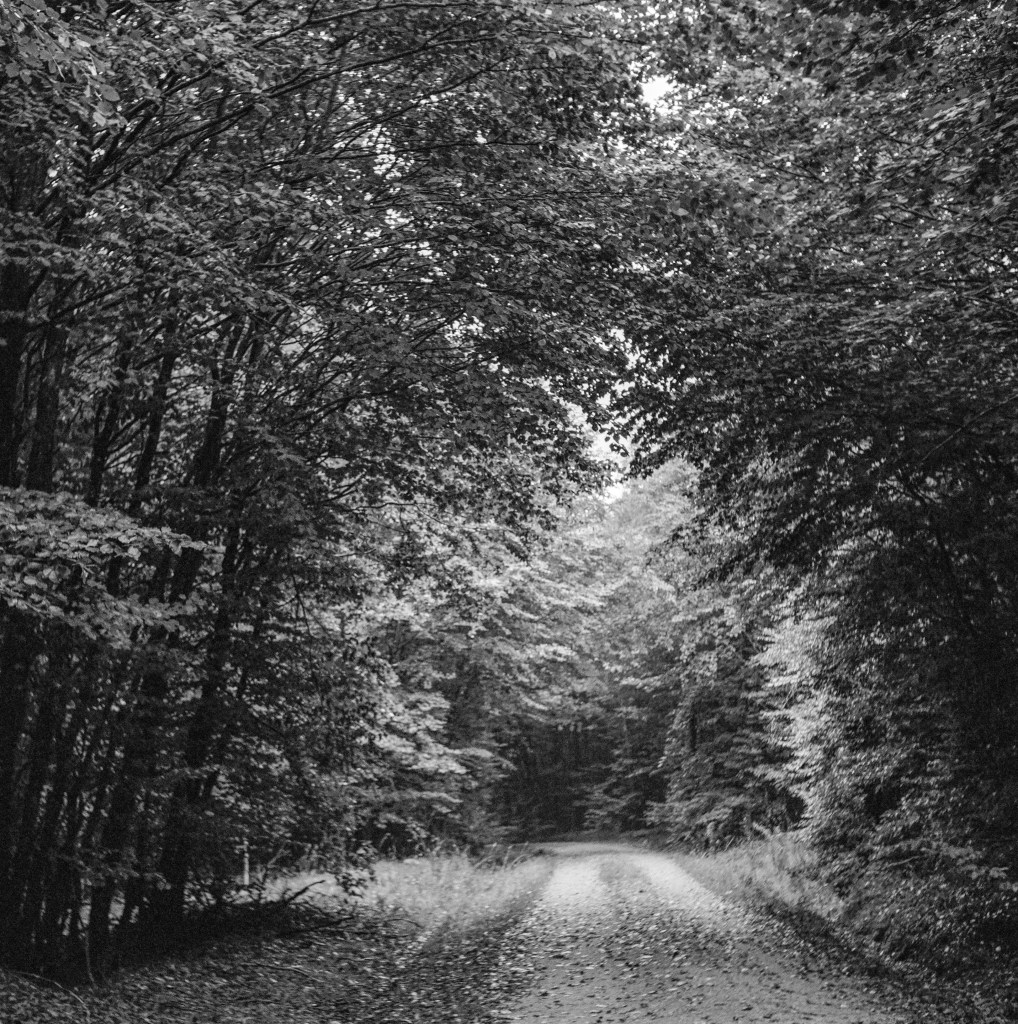
Forest path I and II (Zeiss Ikon Super Ikonta III (531/16) Novar, Ilford HP5 Plus 400 @ ISO 1600, 1/200 sec and f/5.6)
Using the Novar triplet lens and setting the aperture wide open to f/5.6 results in distinct softening, which adds to the softening from the limited depth of field. Pushing the HP5 two stops did not increase the contrast of these dull weather scenes too much.
Uncoated Lens
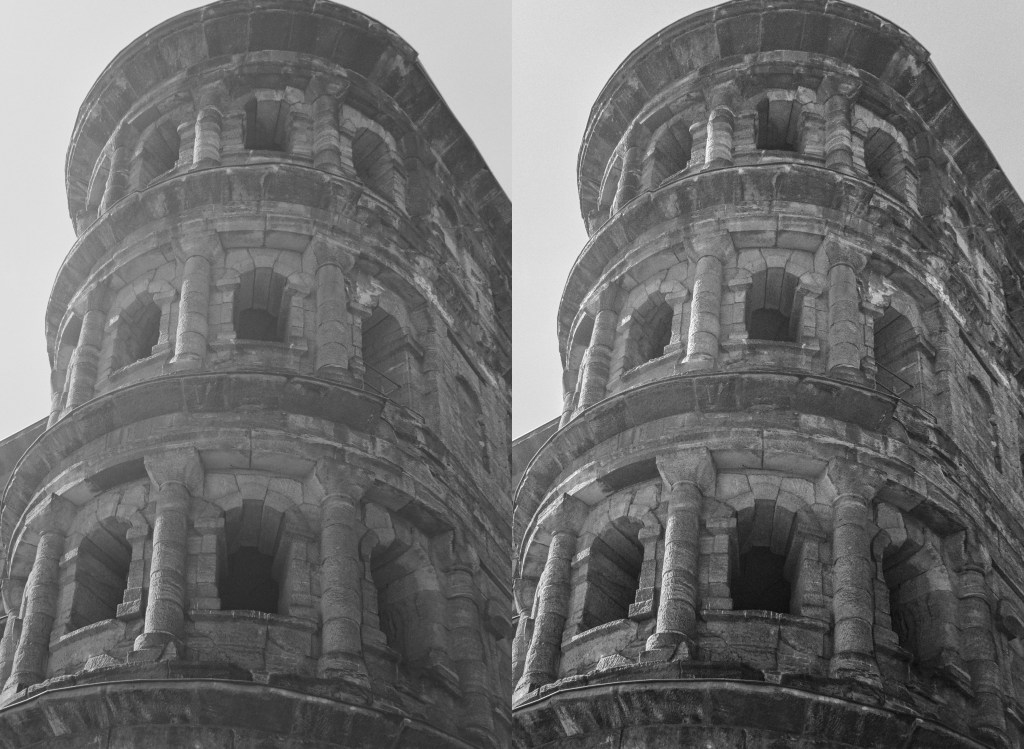
Porta Nigra, Trier (Zeiss Ikon Ikonta A (521) uncoated Novar, Ilford HP5 Plus 400, 1/200 sec and f/16-22) – left: no editing, right editing with Lightroom: slightly increasing clarity and sharpness.
The lack of contrast of pictures taken with an uncoated lens becomes clearly visible, when direct light hits the lens (here: sidelight with some amount of direct light). For me, low contrast pictures can better be corrected in post-editing than high contrast pictures. Besides, the low contrast version better represents the vintage look, which can be applied to appropriate shots according to the photographer’s taste. The Ilford HP5 helps, because this film is less contrasty than for example Kodak Tri-X or TMax 400.
Uncoated lens and wide aperture
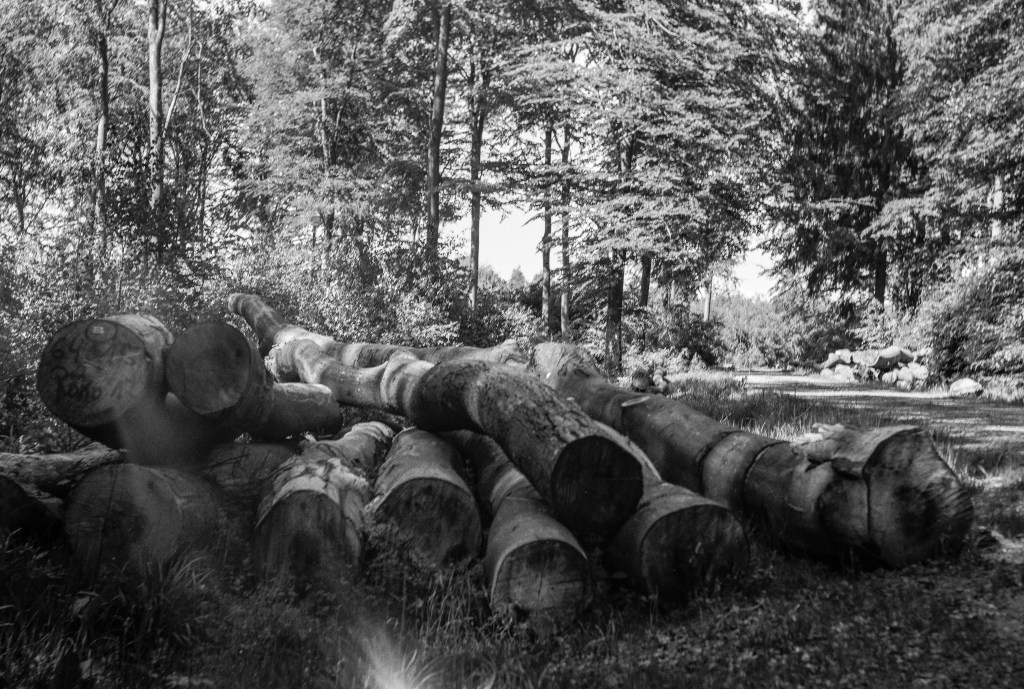
Wood harvest (Zeiss Ikon Ikonta C (521/2) uncoated Novar, Ilford HP5 Plus 400, 1/200 sec and f/8)
Another approach for producing a vintage look: a pre-war Ikonta fitted with an uncoated triplet lens and adjusting the aperture rather wide open. Using the Novar lens with the aperture set to f/8 results in a distinct softening, which adds to the softening from the limited depth of field. Note that the depth of field of the 10,5 cm lens for 6×9 format is even narrower than that of the 75 mm lens for the 6×6 format. Again, the Ilford HP5 helps because of his low-contrast characteristics. Possibly, some lens haze and camera shake may have increased the softening.
Although I enjoy the fine detail of the stopped down Novars or Tessars, distinct sharpness is not essential for many photos and therefore is not a must for me. Lower sharpness and contrast make photos softer and more pictorial or painterly. For some reason I like this dreamy look. Even the lens flare at the left and the light leak at the bottom don’t bother me here.
See also my flickr photo gallery: https://www.flickr.com/photos/165607631@N07/
 Old Glass