
Agfa Isolette III
The Agfa Isolette III is one of the compact folding viewfinder cameras for 6×6 cm pictures on 120 film format, produced by Agfa Kamerawerk AG in Munich (Germany). It is the last model of a series of medium format folding cameras named Isolette with the first model released 1937 and the last one around 1960.
The Isolette I is a comparatively low-specification model with a coated triplet-type f/4.5 Agnar lens and a synchronized Vario or Pronto shutter with only three (Vario) or four (Pronto) shutter speeds (1/25, 1/50, 1/100, 1/200 sec, and B; Vario: no 1/100 sec). The Agfa Isolette II (1951-1960) offering higher specifications was produced and sold alongside the Agfa Isolette I as an alternative model. The camera was optionally available with a coated f/4.5 85 mm Agnar or Apotar lens or with an f/3.5 75 mm Solinar lens. Different lens and shutter combinations were available.
The Agfa Isolette III (1951-1960) is seen as the best-specified Isolette. This model has a double exposure lock and an uncoupled rangefinder, which is operated with a small thumb-wheel on the right of the top housing. The distance is read off and transferred to the front-element focusing ring. The lens is an f/4.5 85 mm Apotar with a Pronto or Prontor-SV or Prontor-SVS shutter, or a Solinar, which is either an f/4.5 85 mm lens with a Synchro-Compur shutter (earlier version), or an f/3.5 75 mm lens with a Prontor-SVS or a Synchro-Compur shutter (later version). The four-elements Solinar design (Tessar-type) is widely seen as the highest-grade Agfa lens.
The Isolette L (1957-1960) is a viewfinder camera with an uncoupled selenium lightmeter and the Super Isolette (1954-1960) has a coupled rangefinder. The optionally available shutter versions were Vario, Pronto, Prontor II, Compur, and Compur-Rapid.
The camera shown below is a later version of the Isolette III (produced 1956-1959) with a film-type reminder dial on the position of the disc-shaped depth-of-field (DOF) calculator of the earlier models and a similar film advance knob. The very last Isolette III version used an exposure value scale to make aperture and shutter speed settings quick and easy. A given exposure value (e.g., measured via exposure meter) can be assigned to a specific aperture value. By turning the coupling ring with the exposure value scale, the shutter speed value corresponding to the selected aperture value will be adapted automatically.
For more information on Agfa 6×6 cm folders see Andrew Yue’s web page: web2.ph.utexas.edu/~yue/misc/AnscAgfa.html
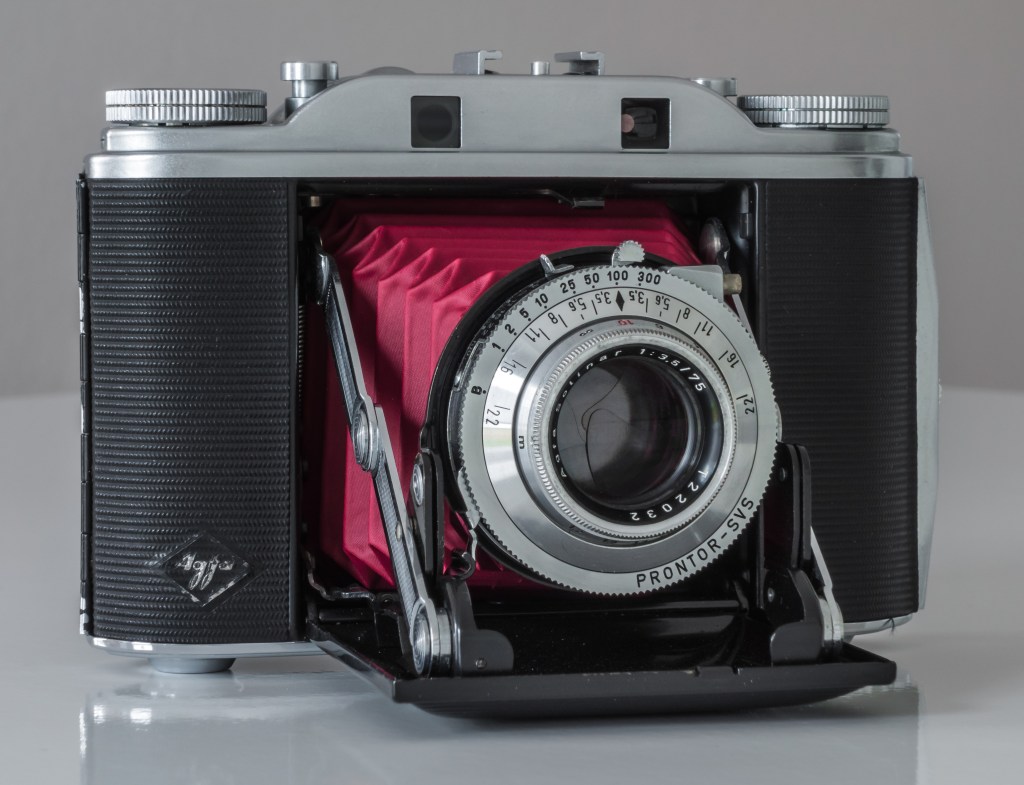
Agfa Isolette III MK II with Solinar f/3.5 75 mm and Prontor-SVS shutter
Agfa Record III
The Agfa Record III is the last model of a series of medium format folding cameras for 6×9 cm pictures on 120 film produced 1952-1955 by Agfa Kamerawerk AG in Munich (Germany). All camera versions are sharing the same body structure. The main difference of the Agfa Record III model in comparison with the previous versions is an uncoupled rangefinder, which is operated with a small thumb-wheel on the right of the top housing. The distance is read off and transferred to the front-element focusing ring. The cameras were offered alternatively with different lenses: Agfa’s triplets (Agnar, Apotar) or the Tessar-type Solinar, in all cases with maximum aperture of f/4.5 and coated. The shutter alternatives were Prontor, Prontor-S, Prontor-SV, Compur-Rapid, and Synchro-Compur. Quite similar to the Agfa Isolette versions, different lens and shutter combinations were available. The four-elements Solinar lens with Synchro-Compur shutter is widely seen as the premium combination for both the Isolette and the Record model line.
What I like
After some years of using this camera line, I should emphasize some advantages: First, Agfa folders are comparatively compact and light, but nonetheless well-constructed. Second, the performance of the Tessar-type Solinar lenses is really excellent. Stopped down the boarders and even the far corners are sharp. Third, the shutter release mechanism feels smooth and soft, effectively reducing camera shake. Finally, loading film is easy by moving the film holder out of the film chamber and swinging its hinged flap outward.
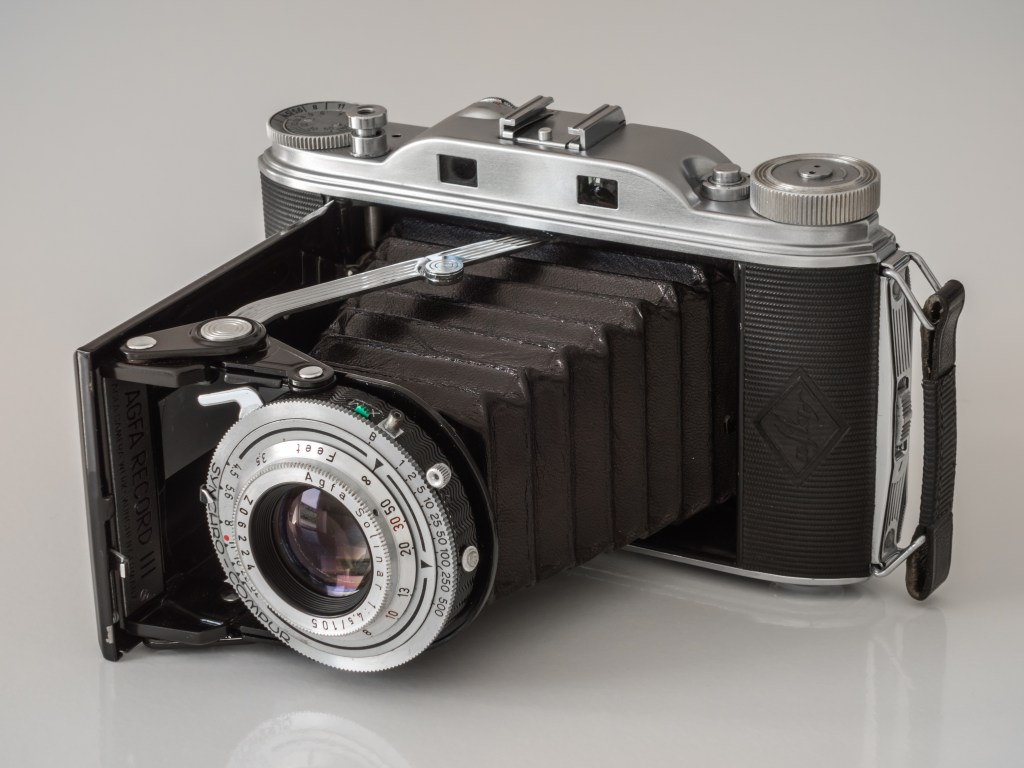
Agfa Record III with Solinar f/4.5 105 mm and Synchro-Compur shutter
Sample pictures
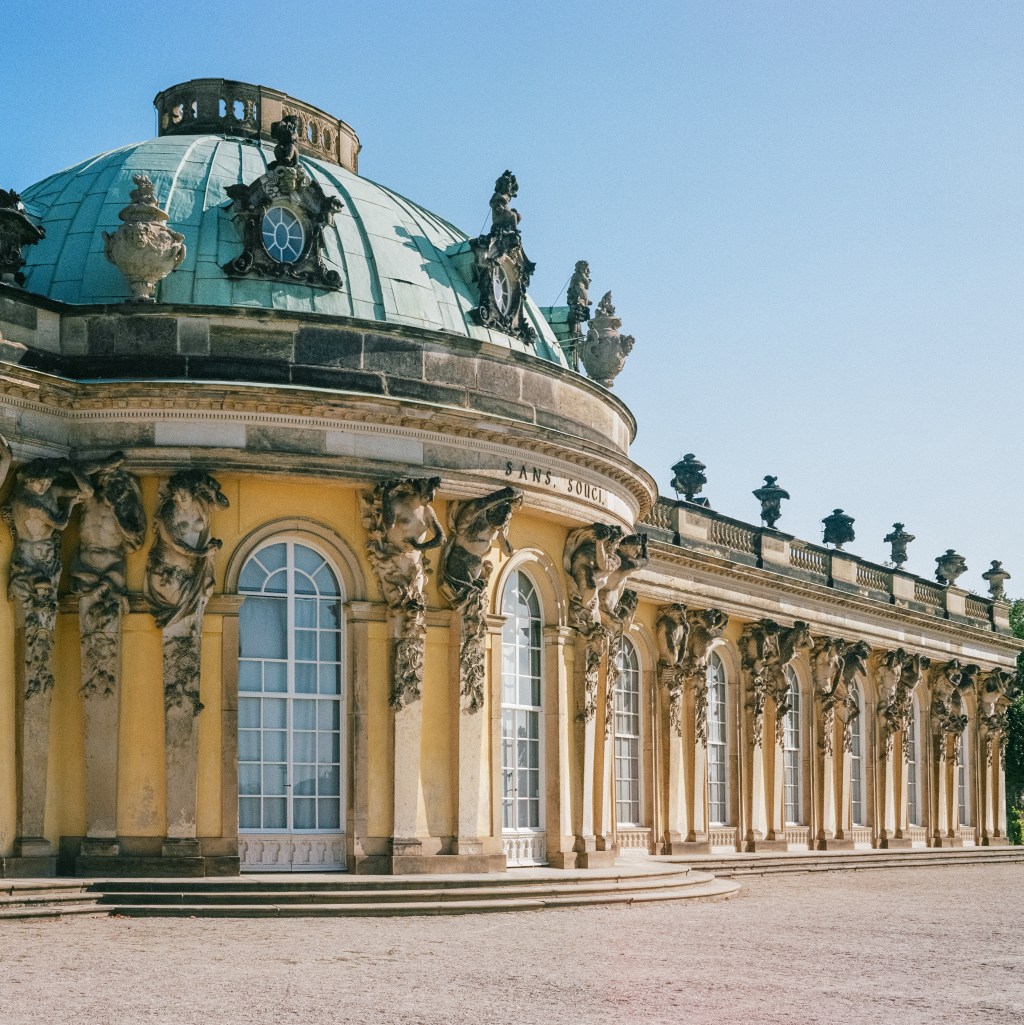
Sanssouci Palace, Potsdam (Agfa Isolette III Solinar, Kodak Portra 400, 1/250 sec and f/22)
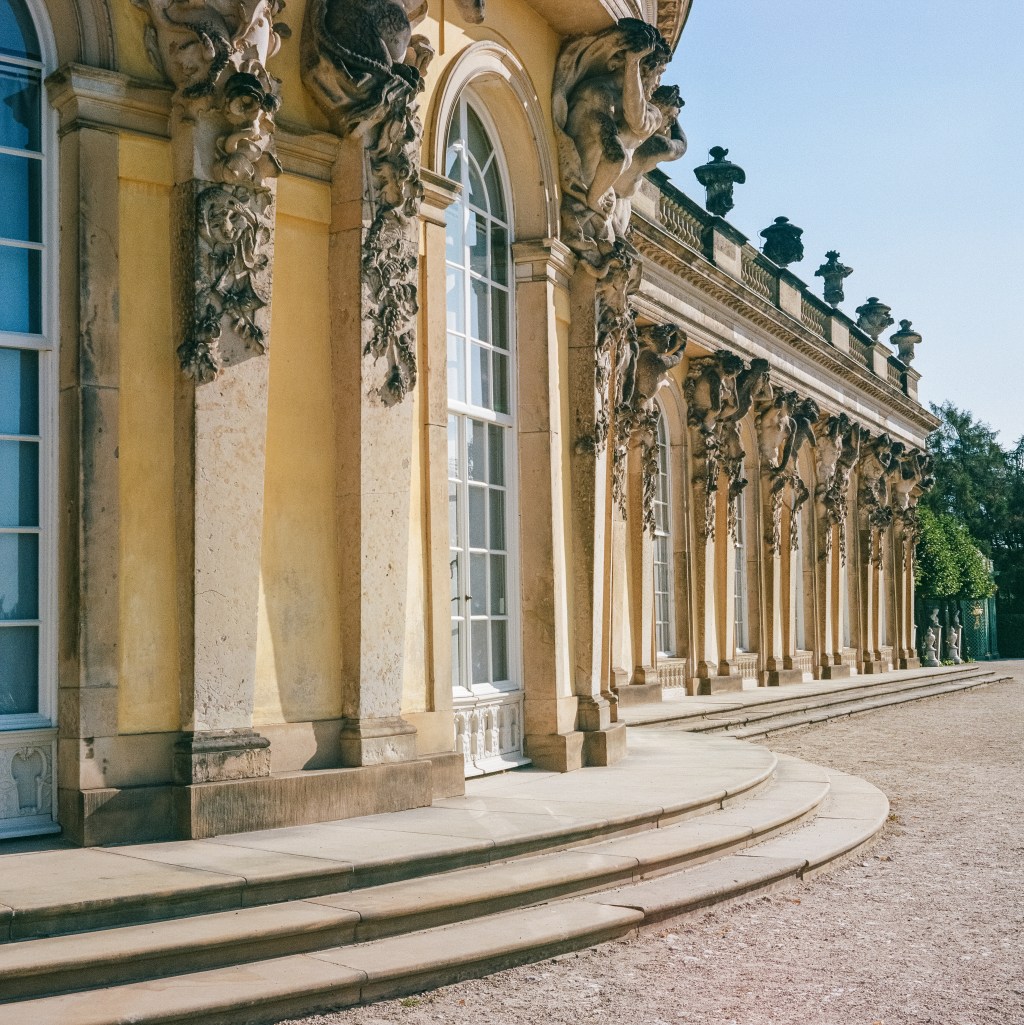
Sanssouci Palace, Potsdam (Agfa Isolette III Solinar, Kodak Portra 400, 1/250 sec and f/22)
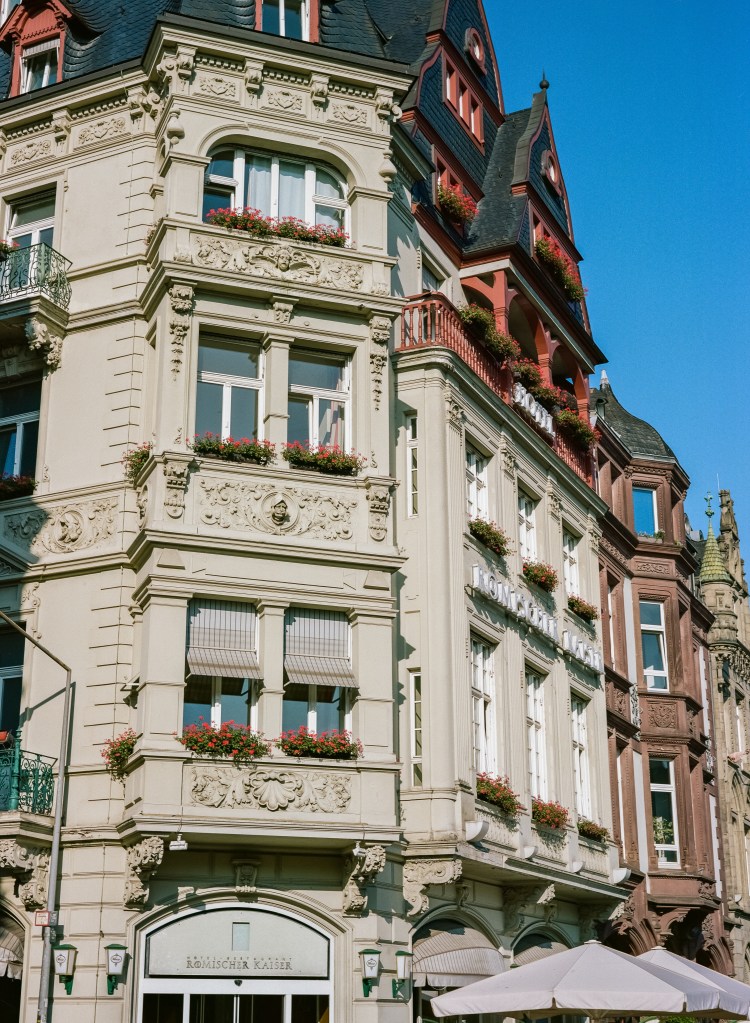
Hotel Römischer Kaiser, Trier (Agfa Record III Solinar, Kodak Portra 160, 1/250 sec and f/16)
See also my flickr photo gallery: https://www.flickr.com/photos/165607631@N07/
 Old Glass